







 Browse all of our latest insights and updates.
 Ready to Schedule?
Save time by selecting your own appointment slot through our secure scheduling portal.


For patients who want effective treatment for varicose veins or chronic venous insufficiency but have concerns about needles, heat, or post-procedure discomfort, VenaSeal offers something genuinely different. It is the leading vein closure treatment that uses a medical adhesive rather than heat energy, which means no tumescent anesthesia, no thermal energy near the skin, and a more comfortable experience from start to finish for many patients.
At Miller Vein, our board-certified vein specialists offer VenaSeal as part of a comprehensive suite of minimally invasive treatment options. Whether VenaSeal is the right choice for your specific situation depends on your venous anatomy, your symptoms, and your goals, all of which are assessed during your evaluation. What we can tell you is that when it is the right fit, patients consistently appreciate how different it feels compared to what they expected vein treatment to be.
To see how this fits into a complete care plan, visit professional varicose vein care.
VenaSeal is a minimally invasive vein closure system that uses a specially formulated medical adhesive to seal diseased veins from the inside, permanently closing them and rerouting blood flow to healthy surrounding vessels. Once the treated vein is sealed, the body gradually reabsorbs it over the following weeks, and it disappears entirely.
The VenaSeal procedure was developed as an alternative to thermal ablation techniques such as radiofrequency ablation and laser ablation. Rather than using heat to collapse the vein wall, VenaSeal delivers a precise amount of a cyanoacrylate-based adhesive directly inside the affected vein through a small catheter. The adhesive creates an immediate bond that closes the vein upon contact.
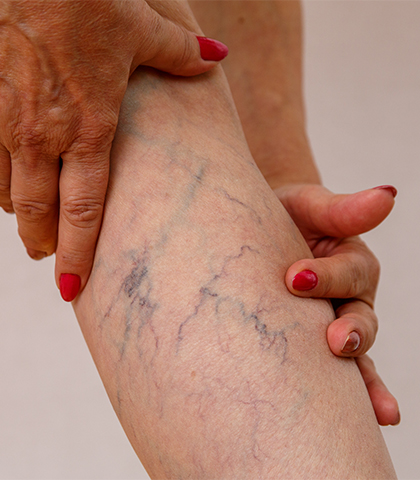
VenaSeal is used to treat the same underlying venous reflux that drives several common vein-related conditions, including the following:
It helps to understand the condition first — see varicose vein signs and symptoms for the full picture.
CVI occurs when the one-way valves inside the great saphenous vein, small saphenous vein, or other significant leg veins fail, allowing blood to flow backward and pool in the lower legs. This venous reflux elevates pressure throughout the lower leg, producing the aching, heaviness, swelling, fatigue, and skin changes characteristic of the condition. VenaSeal closes the refluxing vein at its source, eliminating the pressure and allowing symptoms to resolve.
Varicose veins are a direct and visible consequence of symptomatic venous reflux disease. When blood pools in the leg veins due to valve failure, the increased pressure stretches the vessel walls and produces the bulging, twisted veins visible beneath the skin. By sealing the saphenous vein driving the reflux, VenaSeal removes the pressure that has been causing varicose vein formation. Many associated varicose veins shrink and fade in the weeks following treatment as that pressure is relieved.
For patients whose restless leg syndrome is caused or contributed to by venous insufficiency, treating the underlying vein disease offers meaningful symptom improvement. Research has shown that 87% of patients receiving endovenous treatment for venous reflux experience improvement in RLS symptoms. VenaSeal is an effective option for addressing the venous component of RLS in appropriate candidates.

I was extremely happy with my results. I was treated with Sclerotherapy. Before and after pictures are incredible! I was very self-conscious about how my legs looked and always wore long capris in the summer to cover them. I wish I had done this sooner. The staff was very professional, friendly, and knowledgeable. They made me feel very comfortable.
The front desk personnel were very professional and welcoming. I was seen by one of the most welcoming and patient ultrasound technicians. She was very pleasant and informative. She explained every step and made me feel comfortable throughout the exam. The doctor is the reason the office is so calm and welcoming. The doctor was informative as she explained the diagnosis and plan of care needed. I would definitely refer someone in need of their services.
Very friendly staff and very thorough. They explained everything as they went through the different steps during the appointment. I felt very at ease here. I am very happy I chose them.
The staff is so friendly. They explain well before they do anything. Dr Miller is awesome. Explains treatment and plan of care in detail. Answers all questions thoroughly. Had a very good consultation.
Highly recommend.


VenaSeal is a versatile treatment option and is appropriate for a broad range of patients with confirmed saphenous reflux. It is particularly well-suited for:
VenaSeal is not appropriate for everyone. Patients with a known allergy to cyanoacrylate adhesives are not candidates for the procedure. Certain vein anatomies or clinical situations may make thermal ablation or another approach more appropriate. Your specialist will review your ultrasound findings and medical history to determine the best treatment option for your specific circumstances.
VenaSeal is often an excellent choice for treating diseased veins below the knee. In the lower leg, the great saphenous vein runs close to the saphenous nerve, and the small saphenous vein runs alongside the sural nerve in the back of the calf. Because VenaSeal closes the vein with a medical adhesive instead of heat, it helps minimize the risk of irritating these nearby nerves.
Heat-based treatments like radiofrequency and laser ablation use thermal energy to close the vein. Where a nerve sits right next to the vein, that heat can sometimes irritate it, causing numbness, tingling, or a burning feeling in the lower leg, ankle, or foot. These symptoms are usually temporary, but a non-thermal approach helps avoid them. VenaSeal uses no heat and no tumescent injections along the vein, so it’s well suited for:
Not every below-the-knee vein needs VenaSeal. At your consultation, a Miller Vein specialist reviews your duplex ultrasound to see where your veins run in relation to nearby nerves, then recommends the safest approach for your anatomy. Give us a call to schedule.
Once the catheter is removed, a light dressing is applied at the access site. Because VenaSeal does not require tumescent anesthesia, patients typically do not experience the temporary leg heaviness or numbness that can follow thermal ablation procedures. Most patients notice very little difference in how their leg feels immediately after the procedure and are able to walk out of the clinic and resume normal light activities right away.
Compression stockings following VenaSeal are typically less intensive than after thermal ablation, though your specialist will advise on the appropriate approach based on your individual circumstances.







One of the most reassuring things about VenaSeal is how straightforward it is for most patients. Here is a clear, honest walkthrough of what the procedure involves from start to finish.
Do you struggle with large, bulging, rope-like veins? Do your legs often feel heavy or achy? These symptoms are common signs of varicose veins....
Read BlogPregnancy is a beautiful journey, but we know it comes with challenges. One you may not have heard of? Vulvar varicosities or VVs. These...
Read BlogMiller Vein offers VenaSeal vein closure at eight convenient locations throughout Michigan. We see patients at:
Our clinics are open Monday through Friday, 7:00 AM to 5:30 PM.
If concerns about the injection process have been keeping you from seeking vein care, VenaSeal may be exactly what you have been waiting for. Schedule your consultation at Miller Vein today and find out whether VenaSeal is the right fit for your vein health.
Prefer a call? Fill out the form below, and our team will reach out to help you coordinate your visit.
"*" indicates required fields
Save time by selecting your own appointment slot through our secure scheduling portal.