





 Browse All Of Our Latest Insights
 Ready to Schedule?
Save time by selecting your own appointment slot through our secure scheduling portal.


Endovenous laser ablation is one of the most advanced and most effective treatments available for vein disease, and it looks nothing like the vein stripping procedures of previous generations.
At Miller Vein, our board-certified vein specialists use endovenous laser ablation to treat the faulty veins driving varicose veins and chronic venous insufficiency, all in the office, under local anesthesia, with no surgical incisions and little-to-no downtime. Most patients walk out of the clinic and return to normal activities the same day.
This procedure is one of several approaches we use — compare it with modern varicose vein care to see the full range.
We offer laser ablation at our clinics throughout Michigan in Auburn Hills, Dearborn, Grand Rapids, Holland, Macomb, Novi, St. Clair Shores, and Troy.
See what causes varicose veins to form in our full guide.
Endovenous laser ablation (EVLA), also called endovenous laser treatment (EVLT), is a minimally invasive procedure that uses laser energy to close off diseased veins from the inside. Rather than removing the vein through surgery, EVLA seals it shut so the body can naturally reabsorb it over time while blood reroutes through the healthy veins surrounding it.
The procedure centers on a thin laser fiber that is inserted directly into the affected vein through a small access point in the skin. Once positioned under ultrasound guidance, the fiber delivers precise pulses of laser energy along the length of the vein. This energy heats the vein wall, causing it to contract, collapse, and seal permanently. The treated vein is no longer functional and gradually disappears as the body reabsorbs it over the following weeks.
Because the entire procedure is performed from within the vein through a single small entry point, there are no surgical incisions, no stitches, and no scarring. The surrounding tissue is protected throughout, and the laser energy is targeted exclusively at the vein being treated.
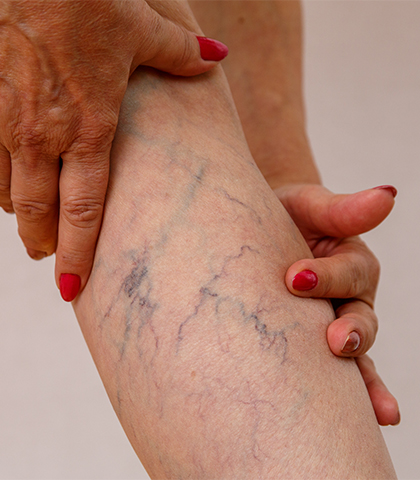
Many patients are surprised to learn how dramatically vein treatment has evolved. For decades, the primary treatment for varicose veins and CVI was surgical vein stripping, a procedure performed under general anesthesia that involved physically removing the saphenous vein through incisions in the groin and leg. Recovery took weeks, the procedure carried the risks of general anesthesia and surgical complications, and results were not significantly better than what modern minimally invasive techniques achieve.
Endovenous laser ablation has largely replaced surgical stripping as the standard of care. The two approaches achieve the same fundamental outcome, closing the refluxing vein and rerouting blood flow, but laser ablation does so through a single small skin entry point, under local anesthesia, in approximately one hour, with patients walking out the same day.
If you were evaluated for vein treatment years ago and were told the only option was surgery, it is worth coming back for a current evaluation. The standard of care has changed substantially. h the visible veins and any root causes.

The front desk personnel were very professional and welcoming. I was seen by one of the most welcoming and patient ultrasound technicians. She was very pleasant and informative. She explained every step and made me feel comfortable throughout the exam. The doctor is the reason the office is so calm and welcoming. The doctor was informative as she explained the diagnosis and plan of care needed. I would definitely refer someone in need of their services.
My experience was amazing. I got there a little bit early, I was taken right back. Everybody was very nice, explained everything to me as they went. I would recommend Miller Vein to anybody; they are fantastic.
Great Clinic! So glad I went. My legs feel so much better! I can already see some of the benefits and will just get better over time! The doctors and staff are so kind and friendly. Such an easy location with lots of free parking. Highly recommend!!


Miller Vein offers endovenous laser ablation at eight convenient locations throughout Michigan. We see patients at:
Our clinics are open Monday through Friday, 7:00 AM to 5:30 PM.
Recovery from laser ablation is straightforward for most patients, and the timeline for both recovery and results is predictable.
In the days immediately following the procedure, it is normal to experience mild bruising, some soreness along the path of the treated vein, and occasionally a feeling of pulling or tightness in the leg. These sensations reflect the normal response of the tissue as the treated vein contracts and begins to be reabsorbed. They typically resolve within one to two weeks and are manageable with over-the-counter pain relief if needed.
Wearing your compression stockings consistently during the recovery period is important. Compression supports the treated vein, reduces swelling, and helps the body process the closed vessel efficiently.
Most patients notice meaningful improvement in leg symptoms, including heaviness, aching, and swelling, within two to four weeks of treatment. Varicose veins that were connected to the treated reflux source begin to shrink and fade over the following weeks to months as the body reabsorbs the affected tissue.
A follow-up ultrasound is typically scheduled four to six weeks after the procedure to confirm that the treated vein has closed completely and to assess the response of any associated varicose veins. If additional treatment is needed for residual surface veins, sclerotherapy is often scheduled at or around this appointment.
Endovenous laser ablation offers a safe, effective, and minimally invasive path to relief from the symptoms of varicose veins and chronic venous insufficiency. At Miller Vein, our board-certified specialists use advanced ultrasound-guided techniques to deliver precise, lasting results in a comfortable, patient-focused environment.
Schedule your consultation at Miller Vein today and take the first step toward better vein health.






Understanding exactly what happens during a laser ablation procedure often helps patients come in feeling prepared and confident rather than anxious. Here is a clear, straightforward walkthrough of what the process looks like at Miller Vein.
We weren’t expecting this particular holiday gift, but you all went ahead and got us one anyway! Based on your reviews of our Dearborn...
Read BlogWhen we think about major health threats, we often picture sudden illnesses like heart attacks or the flu. But one of the biggest challenges...
Read BlogPrefer a call? Fill out the form below, and our team will reach out to help you coordinate your visit.
"*" indicates required fields
Save time by selecting your own appointment slot through our secure scheduling portal.