




 Browse all of our latest insights and updates.
 Ready to Schedule?
Save time by selecting your own appointment slot through our secure scheduling portal.


Some varicose veins are large, bulging, and close to the skin’s surface in a way that makes them particularly visible and uncomfortable. For those veins, microphlebectomy offers something that injection or ablation treatments alone cannot: immediate, direct removal in a single in-office visit, with no stitches required and no surgical hospitalization.
At Miller Vein, microphlebectomy is performed by board-certified vein specialists using local anesthesia through tiny puncture openings so small they leave virtually no scarring. It is a safe, effective, and well-established procedure and is one of the most satisfying treatments we offer for patients who want visible, dramatic improvement in the appearance and comfort of their legs.
It’s often discussed alongside options for treating varicose veins during your evaluation.
Microphlebectomy, also called ambulatory phlebectomy or stab avulsion phlebectomy, is a minimally invasive in-office procedure in which surface varicose veins are removed directly through a series of tiny puncture openings in the skin. Each opening is made with a fine needle or small blade tip and measures only one to three millimeters in diameter. Through these micro-incisions, a small hook-like instrument is used to gently grasp and remove the varicose vein segment by segment.
Because the incisions are so small, no stitches or sutures are required. The skin heals naturally, and scarring is minimal to none for most patients. The procedure is performed under local anesthesia in the office, meaning there is no general anesthesia, no hospital stay, and no surgical recovery period.
Microphlebectomy produces immediate results. Unlike ablation and sclerotherapy, which require weeks of gradual reabsorption before visible improvement is seen, microphlebectomy removes the vein entirely during the session. Patients can often see the difference before they leave the clinic.
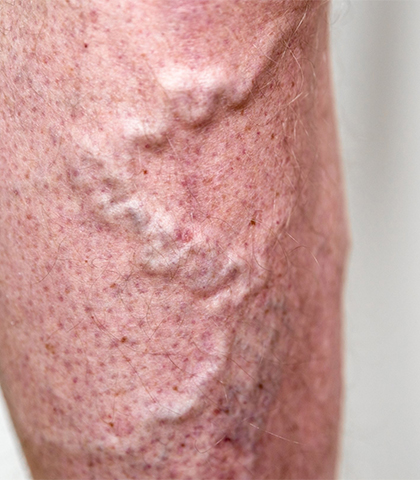
Microphlebectomy is not a standalone treatment for all forms of vein disease. It is most effective when used for specific types of surface varicose veins, often in combination with other treatments as part of a comprehensive vein care plan.
Not sure whether this applies to you? Our guide to bulging leg veins explains the condition itself.
The ideal candidates for microphlebectomy are those who have large, well-established varicose veins that are visible, close to the skin’s surface, and causing symptoms such as aching, tenderness, or heaviness. These veins are typically too large to respond fully to sclerotherapy alone and may not shrink adequately following ablation of the primary vein without additional direct treatment.
Following radiofrequency ablation, laser ablation, or VenaSeal treatment of the saphenous vein, some patients have persistent surface varicose veins that do not resolve despite the underlying reflux being corrected. Microphlebectomy is an efficient and effective option for removing these residual veins directly in a follow-up session.
Sclerotherapy works best on smaller and medium-sized veins. Very large or nodular varicose veins that are unlikely to close adequately with injection alone are better addressed with microphlebectomy, which physically removes the vein rather than relying on chemical closure.
Because microphlebectomy removes the vein during the procedure itself, patients who prioritize immediate, visible improvement are often well served by this approach. There is no waiting weeks for gradual fading. The treated veins are gone.

The front desk personnel were very professional and welcoming. I was seen by one of the most welcoming and patient ultrasound technicians. She was very pleasant and informative. She explained every step and made me feel comfortable throughout the exam. The doctor is the reason the office is so calm and welcoming. The doctor was informative as she explained the diagnosis and plan of care needed. I would definitely refer someone in need of their services.
The staff was wonderful and really took my concerns and put my mind at ease. I would definitely recommend them to everyone. Staff on time, and had my ultrasound done and saw the doctor and was out of the office start to finish 90 minutes, was first visit. The Dearborn office was wonderful.
Great Clinic! So glad I went. My legs feel so much better! I can already see some of the benefits and will just get better over time! The doctors and staff are so kind and friendly. Such an easy location with lots of free parking. Highly recommend!!
The office was clean and very visually appealing. The staff were all courteous and professional. Each part of the exam was well described prior to it happening. The doctor listened intently and explained thoroughly. This was an enjoyable experience putting my anxiety at ease.


Recovery from microphlebectomy is generally straightforward, and most patients are pleasantly surprised by how manageable it is.
Immediately after the procedure, the leg is bandaged and a compression stocking is applied. You walk out of the clinic and are encouraged to move around normally. Walking is not just permitted after microphlebectomy, it is encouraged, as movement supports healthy circulation during recovery.
In the first few days, bruising along the treated area is very common and should be expected. The bruising can be significant at first but typically resolves over one to three weeks. Mild swelling, soreness, and a feeling of tightness or firmness along the path of the removed vein are all normal responses and gradually improve over the same timeframe.
The micro-incision sites heal quickly. Because no sutures are placed, there is no need for suture removal, and the closure strips fall away on their own as the skin heals. For most patients, scarring at the incision sites is minimal to invisible once healing is complete.
We ask that you wear your compression stockings consistently during the recovery period and avoid strenuous exercise and heavy lifting for approximately one to two weeks. Specific activity restrictions will be discussed at your procedure appointment based on your individual circumstances.






Understanding what happens during microphlebectomy helps patients come in feeling confident and prepared. Here is a clear, honest walkthrough of the process at Miller Vein.
Do you struggle with large, bulging, rope-like veins? Do your legs often feel heavy or achy? These symptoms are common signs of varicose veins....
Read BlogIf you’re dealing with leg pain, swelling, varicose veins, or a wound that won’t heal, the last thing you should have to worry about...
Read BlogPrefer a call? Fill out the form below, and our team will reach out to help you coordinate your visit.
"*" indicates required fields
Save time by selecting your own appointment slot through our secure scheduling portal.