








 Browse all of our latest insights and updates.
 Ready to Schedule?
Save time by selecting your own appointment slot through our secure scheduling portal.


When it comes to treating varicose veins and chronic venous insufficiency, radiofrequency ablation is one of the most widely performed minimally invasive procedures in vein care today. It has replaced surgical vein stripping as the preferred treatment for most patients with saphenous vein reflux, and for good reason. It works, it is comfortable, it requires no downtime, and it is performed entirely in the office.
At Miller Vein, our board-certified vein specialists use the ClosureFast catheter to deliver radiofrequency ablation with precision and consistency. If your legs have been aching, swelling, or simply not feeling right, and an ultrasound has confirmed venous reflux, RFA may be the most effective path to lasting relief.
You can also get your varicose veins treated to compare your options.
Radiofrequency ablation is a minimally invasive procedure that uses radiofrequency energy to heat and permanently close diseased veins from the inside. Rather than removing the vein surgically, RFA seals it shut so that blood is naturally rerouted through the healthy veins surrounding it. Over the following weeks, the body gradually reabsorbs the closed vein, and it disappears entirely.
At Miller Vein, we perform RFA using the ClosureFast catheter, the industry-leading device for radiofrequency vein closure. The ClosureFast catheter is inserted into the affected vein through a small access point in the skin, positioned precisely under ultrasound guidance, and used to deliver controlled radiofrequency energy in measured, consistent segments along the length of the vein. Each segment is treated for twenty seconds at a precisely regulated temperature, causing the vein wall to contract, collapse, and seal uniformly from end to end.
This temperature-controlled approach is one of the defining advantages of the ClosureFast system. The energy delivery is consistent, regulated, and predictable in a way that has made RFA one of the most extensively studied and reliably effective techniques in modern vein care.
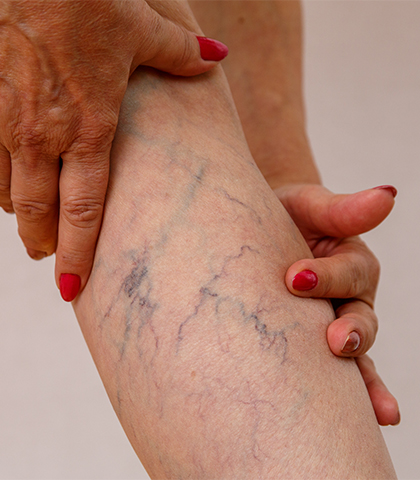
Radiofrequency ablation is the first-line minimally invasive treatment for venous reflux originating in the major truncal veins of the leg. It can also address the underlying cause of several related and often overlapping conditions. Some of the conditions RFA can treat include the following:
Start with understanding varicose veins if you’re still exploring what’s causing your symptoms.
CVI is the most common indication for RFA. The condition occurs when the one-way valves inside the great saphenous vein, small saphenous vein, or other significant leg veins fail to function properly, allowing blood to flow backward and pool in the lower legs. This venous reflux elevates pressure throughout the lower leg tissue, producing the aching, heaviness, swelling, skin changes, and fatigue that characterize CVI. RFA corrects the reflux at its source, and symptoms typically begin improving within weeks of treatment.
Varicose veins are a visible consequence of venous reflux. When blood pools in the leg veins due to valve failure, the increased pressure stretches and distorts the vessel walls, producing the bulging, twisted surface veins visible beneath the skin. Treating the reflux driving varicose veins with RFA eliminates the pressure at its source. Many varicose veins shrink and fade significantly in the weeks following ablation as that pressure is removed.
Venous insufficiency is a well-documented and frequently overlooked cause of restless leg syndrome. For patients whose RLS is driven by venous reflux rather than a purely neurological cause, RFA offers the opportunity to treat the problem at its root rather than managing it indefinitely with medication.
For patients with venous ulcers caused by advanced CVI, RFA is a critical component of the treatment plan. Reducing venous hypertension through ablation improves the circulatory environment around the wound, accelerates healing rates, and significantly reduces the likelihood of recurrence compared to wound care without vascular treatment.

The staff was wonderful and really took my concerns and put my mind at ease. I would definitely recommend them to everyone. Staff on time, and had my ultrasound done and saw the doctor and was out of the office start to finish 90 minutes, was first visit. The Dearborn office was wonderful.
The front desk personnel were very professional and welcoming. I was seen by one of the most welcoming and patient ultrasound technicians. She was very pleasant and informative. She explained every step and made me feel comfortable throughout the exam. The doctor is the reason the office is so calm and welcoming. The doctor was informative as she explained the diagnosis and plan of care needed. I would definitely refer someone in need of their services.
The staff is so friendly. They explain well before they do anything. Dr Miller is awesome. Explains treatment and plan of care in detail. Answers all questions thoroughly. Had a very good consultation.
Highly recommend.


Recovery after radiofrequency ablation is typically straightforward and well-tolerated.
In the first few days, it is normal to notice some bruising along the path of the treated vein and mild soreness in the leg, similar to the feeling after a significant workout. Some patients experience a sensation of tightness or pulling along the treated vessel as it contracts and begins to seal. These are expected responses and typically resolve within one to two weeks. Over-the-counter pain relief is sufficient for most patients if any discomfort is present.
Wearing your compression stockings consistently during the recovery period is also important and directly supports the outcome of the procedure. Compression reduces swelling, supports the body’s processing of the closed vein, and is a standard part of post-RFA care.
Symptom improvement typically begins within two to four weeks as treated veins seal completely and blood flow reroutes through healthy vessels. Most patients notice meaningful reductions in leg heaviness, aching, and swelling within the first month. Varicose veins connected to the treated vein begin to shrink and fade over the following weeks to months.
Miller Vein offers radiofrequency ablation with the ClosureFast catheter at eight convenient locations throughout Michigan. We see patients at:
Our clinics are open Monday through Friday, 7:00 AM to 5:30 PM.
Radiofrequency ablation with the ClosureFast catheter is one of the most effective and well-studied treatments in vein care, and at Miller Vein, it is performed by board-certified specialists who have made vein health their entire focus. If your legs have been telling you something is wrong, now is the right time to find out why and what can be done about it.
Schedule your consultation at Miller Vein by calling our office today.






One of the most effective things we can do to help patients feel comfortable before their procedure is give them a clear, honest picture of what to expect. Here is a straightforward walkthrough of how radiofrequency ablation is performed at Miller Vein.
Choosing where to have a vein procedure matters. The outcome of radiofrequency ablation depends not just on the technology used but on the skill, experience, and diagnostic accuracy of the specialist performing it. Here is what sets Miller Vein apart.
Contact Us
Every RFA procedure at Miller Vein is performed by a board-certified physician who specializes in vein disease. You are seen by an expert whose entire clinical focus is on vein health, not a generalist adding vein procedures to a varied schedule.
Our specialists use duplex ultrasound throughout every procedure, not just for initial positioning. Real-time imaging ensures that the catheter is placed accurately, the vein is treated completely, and the surrounding tissue is protected at every stage.
RFA is rarely the only treatment a patient needs. Most patients benefit from a coordinated plan that may include ablation, sclerotherapy, microphlebectomy, and compression therapy in a structured sequence. Our specialists design individualized plans based on each patient’s ultrasound findings, symptoms, and goals, ensuring that all contributing veins are addressed, not just the most visible one.
We’re often asked: “Is it really safe to have a vein procedure if you’re in your 80s?” It’s a great question. Thankfully, a group...
Read BlogHave you heard of the Detroit-based Home Health Care Today Show? If you’re looking to hear from health professionals about how to maintain a...
Read BlogPrefer a call? Fill out the form below, and our team will reach out to help you coordinate your visit.
"*" indicates required fields
Save time by selecting your own appointment slot through our secure scheduling portal.