





 Browse All Of Our Latest Insights
 Ready to Schedule?
Save time by selecting your own appointment slot through our secure scheduling portal.


A DVT diagnosis can feel overwhelming, but deep vein thrombosis is very treatable, and early intervention makes a meaningful difference in outcomes. At Miller Vein, our board-certified vein specialists are experienced in identifying DVT through on-site ultrasound evaluation and coordinating appropriate treatment quickly so you are never left waiting for answers or next steps.
We see patients at eight convenient Michigan locations: Auburn Hills, Dearborn, Grand Rapids, Holland, Macomb, Novi, St. Clair Shores, and Troy.
You can learn more about deep vein thrombosis on our condition overview page.
Deep vein thrombosis occurs when a blood clot forms inside one of the deep veins of the body, most commonly in the leg. The primary concern with DVT is the risk of a clot breaking free and traveling to the lungs, a life-threatening complication called a pulmonary embolism. For a full overview of what DVT is, what symptoms to watch for, and what to expect from the evaluation process, visit our DVT Blood Clot Check page.
If you develop any of the following symptoms, call 911 or go to your nearest emergency room immediately. These may indicate a pulmonary embolism:
Some patients are better suited to fast DVT screening — your evaluation will tell us which.
A pulmonary embolism is a medical emergency. Do not wait to seek care if these symptoms arise.
Before your visit, take a look at insurance coverage and financing to see how coverage works.
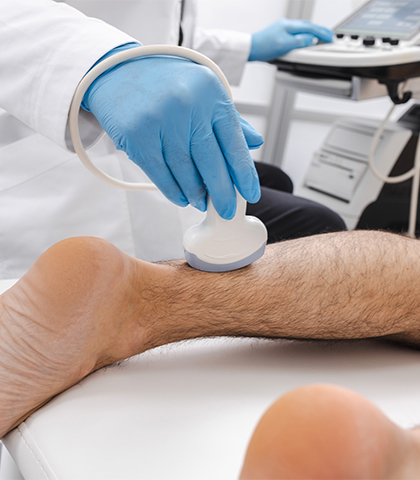
If you are experiencing leg pain, swelling, warmth, or unexplained discomfort, the first step is a DVT evaluation. Miller Vein performs on-site duplex ultrasound, the gold standard diagnostic tool for DVT, at all of our Michigan clinic locations. Results are reviewed with you directly the same day. If a clot is identified, we coordinate your next steps promptly to ensure treatment begins without delay. For detailed information on what the evaluation involves, visit our DVT Blood Clot Check page.

I was extremely happy with my results. I was treated with Sclerotherapy. Before and after pictures are incredible! I was very self-conscious about how my legs looked and always wore long capris in the summer to cover them. I wish I had done this sooner. The staff was very professional, friendly, and knowledgeable. They made me feel very comfortable.
The front desk personnel were very professional and welcoming. I was seen by one of the most welcoming and patient ultrasound technicians. She was very pleasant and informative. She explained every step and made me feel comfortable throughout the exam. The doctor is the reason the office is so calm and welcoming. The doctor was informative as she explained the diagnosis and plan of care needed. I would definitely refer someone in need of their services.
Very friendly staff and very thorough. They explained everything as they went through the different steps during the appointment. I felt very at ease here. I am very happy I chose them.
The staff is so friendly. They explain well before they do anything. Dr Miller is awesome. Explains treatment and plan of care in detail. Answers all questions thoroughly. Had a very good consultation.
Highly recommend.


For patients who have had a DVT, reducing the risk of recurrence is a priority. For those with known risk factors who have not yet experienced a clot, proactive prevention is worth taking seriously.
The calf muscle pump plays a critical role in driving blood upward through the leg veins. Prolonged sitting or inactivity, such as during long flights, road trips, or periods of bed rest, allows blood to pool in the deep veins and significantly increases clot risk. Moving the legs regularly, even simple ankle pumps and short walks, makes a meaningful difference.
Graduated compression stockings reduce venous pooling during situations of prolonged inactivity. They are particularly recommended for long-haul travel, post-surgical recovery, and any period of extended immobility.
For patients on blood thinners following a DVT, taking medication consistently and attending all follow-up appointments is essential.
Maintaining a healthy weight, quitting smoking, staying hydrated, and following your physician’s recommendations all reduce the cumulative vascular risk that contributes to clot formation.
Certain inherited clotting disorders, a history of prior DVT, active cancer, and other medical conditions significantly elevate DVT risk on an ongoing basis. Working closely with your care team to understand and manage your specific risk factors is the most important preventive step available.
Miller Vein offers DVT blood clot ultrasound evaluations and DVT treatment coordination at eight convenient locations throughout Michigan. We see patients at:
Our clinics are open Monday through Friday, 7:00 AM to 5:30 PM.







We weren’t expecting this particular holiday gift, but you all went ahead and got us one anyway! Based on your reviews of our Dearborn...
Read BlogWhen we think about major health threats, we often picture sudden illnesses like heart attacks or the flu. But one of the biggest challenges...
Read BlogPrefer a call? Fill out the form below, and our team will reach out to help you coordinate your visit.
"*" indicates required fields
Save time by selecting your own appointment slot through our secure scheduling portal.
