








 Browse all of our latest insights and updates.
 Ready to Schedule?
Save time by selecting your own appointment slot through our secure scheduling portal.


You glance down at your legs and notice a faint web of red or purple lines that were not there a few years ago. Or maybe they have been there for a while, and you have simply been covering them up. Either way, you are not alone. Spider veins are one of the most common vein conditions in adults, and the good news is that they are both well understood and very treatable.
At Miller Vein, we help patients across Michigan understand what is happening with their veins, what is causing their symptoms, and what their options are.
Modern care has come a long way — see spider vein treatment options for what treatment involves.
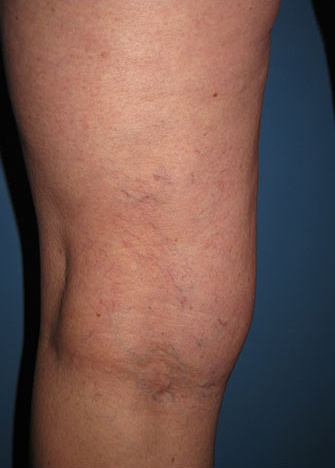
Spider veins, known medically as telangiectasias, are small, dilated blood vessels that become visible near the surface of the skin. They typically measure 1mm or less in diameter and form distinctive web-like, branching, or linear patterns. They can appear red, blue, or purple depending on the size of the vessel and how deep it sits beneath the skin.
Spider veins are most commonly found on the legs, particularly around the thighs, calves, and ankles. They also frequently appear on the face, especially around the nose, cheeks, and chin.
Despite their appearance, spider veins are not the same as large varicose veins. Varicose veins are larger, bulging, and often twisted, sitting deeper in the tissue and typically causing more significant physical symptoms. Spider veins are smaller, flatter, and closer to the skin’s surface. The two conditions can coexist, and spider veins sometimes develop as a secondary effect of varicose veins or underlying venous disease.
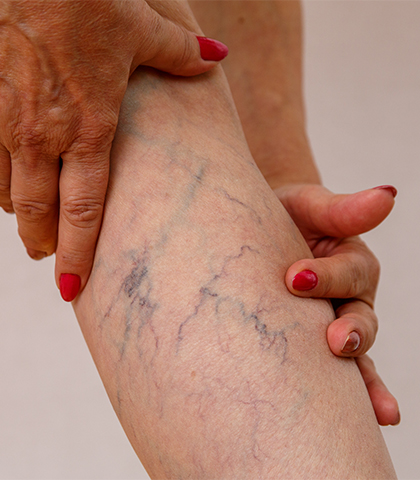
Spider veins form when the walls of small blood vessels weaken or when pressure causes them to dilate over time. Several factors can contribute to this process, and for many people, more than one cause is at play. Some of the most common causes of spider veins include:
For a closer look at this topic, our article on spider veins vs. varicose veins is a helpful read.
Family history is one of the strongest predictors of spider veins. If one or both of your parents had them, your likelihood of developing them is significantly higher. The structural integrity of your vein walls and valves is largely inherited, which is why spider veins often run in families across generations.
Depending on your evaluation, options like VeinErase spider vein program may also play a role in your care plan.
Hormones play a meaningful role in vein health. Estrogen in particular can weaken vein walls, which is why spider veins are more prevalent in women than men. Hormonal fluctuations during puberty, pregnancy, and menopause, as well as the use of hormonal birth control or hormone replacement therapy, are all associated with an increased risk.
Pregnancy is one of the most common triggers for spider veins. Increased blood volume puts greater pressure on the veins throughout the body, and the growing uterus adds additional pressure on the veins in the pelvis and legs. Many women notice spider veins appearing or worsening with each pregnancy.
Occupations or lifestyles that involve standing or sitting for long stretches of time put sustained pressure on the leg veins, making it harder for blood to flow efficiently back toward the heart. Over time, this increased pressure can cause small vessels to dilate and become visible at the skin’s surface.
On the face, prolonged or repeated sun exposure is a significant contributing factor. UV radiation can damage the skin and the tiny blood vessels just beneath it, leading to spider veins on the cheeks, nose, and forehead. People with fair skin or a history of significant sun exposure are particularly susceptible.
As we age, the tissues supporting our veins naturally lose some of their strength and elasticity. Vein valves that help push blood upward against gravity can weaken over time, and the cumulative effects of years of standing, hormonal shifts, and other risk factors become more apparent. Spider veins are extremely prevalent by middle age.
Carrying excess weight increases the pressure placed on the veins in the legs and pelvis, accelerating the development of spider veins. Maintaining a healthy weight is one of the most effective lifestyle measures for slowing the progression.

The front desk personnel were very professional and welcoming. I was seen by one of the most welcoming and patient ultrasound technicians. She was very pleasant and informative. She explained every step and made me feel comfortable throughout the exam. The doctor is the reason the office is so calm and welcoming. The doctor was informative as she explained the diagnosis and plan of care needed. I would definitely refer someone in need of their services.
I was extremely happy with my results. I was treated with Sclerotherapy. Before and after pictures are incredible! I was very self-conscious about how my legs looked and always wore long capris in the summer to cover them. I wish I had done this sooner. The staff was very professional, friendly, and knowledgeable. They made me feel very comfortable.
Very friendly staff and very thorough. They explained everything as they went through the different steps during the appointment. I felt very at ease here. I am very happy I chose them.
The staff was wonderful and really took my concerns and put my mind at ease. I would definitely recommend them to everyone. Staff on time, and had my ultrasound done and saw the doctor and was out of the office start to finish 90 minutes, was first visit. The Dearborn office was wonderful.
The office was clean and very visually appealing. The staff were all courteous and professional. Each part of the exam was well described prior to it happening. The doctor listened intently and explained thoroughly. This was an enjoyable experience putting my anxiety at ease.


For many people, spider veins are primarily a cosmetic concern. They may feel self-conscious about them, but there are no other noticeable symptoms. For others, however, spider veins can cause physical discomfort, and in some cases, they are a visible indicator of a more significant underlying condition.
Even in the absence of a deeper vein problem, spider veins can cause:
These symptoms tend to be worse during warm weather, after prolonged standing, or at certain points in the hormonal cycle.
Spider veins can sometimes be the visible surface sign of venous reflux disease (VRD) or chronic venous insufficiency (CVI). These conditions occur when the one-way valves inside the deeper veins of the leg stop working properly. Instead of moving blood efficiently back toward the heart, the valves allow blood to flow backward and pool in the lower leg.
Symptoms of venous reflux disease and chronic venous insufficiency include:
If you are experiencing any of these symptoms alongside your spider veins, it is important to seek a thorough vein evaluation rather than simply treating what is visible. Addressing an underlying condition is key to achieving results that are both lasting and safe.
Enjoy discounts — or get your treatment completely FREE
Learn More
In most cases, spider veins themselves are not medically dangerous. They do not carry the same risk of blood clots or serious complications as deep vein problems. However, they should not be dismissed entirely.
Spider veins can cause genuine physical discomfort and can meaningfully affect quality of life and self-confidence. They can also, as discussed above, be a sign of underlying venous disease (like deep vein thrombosis) that does warrant medical attention. A proper evaluation helps determine whether your spider veins are a standalone cosmetic concern or part of a bigger picture.
If you have spider veins and are experiencing significant leg symptoms, it is worth speaking with a vein specialist rather than assuming the veins are purely cosmetic.
Spider veins and varicose veins are related conditions, but they are not the same thing, and understanding the difference matters when it comes to choosing the right treatment.
Some people have both conditions simultaneously. Varicose veins can contribute to the development of spider veins by increasing pressure in the surrounding vessels. If you are unsure which condition you are dealing with, a vein evaluation at Miller Vein will give you a clear answer and a path forward.
You do not need to wait until symptoms become severe before scheduling an evaluation. Many people come to Miller Vein simply because they are bothered by how their spider veins look, and that is a completely valid reason to seek care.
That said, there are specific situations where seeing a specialist sooner rather than later is especially important:
A vein specialist can determine whether your spider veins are a standalone cosmetic issue or a sign of something that needs medical attention. Getting that clarity is valuable regardless of what the answer turns out to be.







Spider veins are very treatable, and the options available today are more comfortable and effective than they have ever been. At Miller Vein, we offer two primary treatment methods depending on the type, size, and location of the veins.
Sclerotherapy is the gold-standard minimally-invasive treatment for spider veins on the legs. It involves injecting a small amount of FDA-approved medication directly into the affected vein, causing it to close and gradually fade from view. The procedure is quick, involves no downtime, and most patients find it significantly more comfortable than laser-based alternatives.
VeinGogh™ is an FDA-approved device used for very fine or delicate spider veins, particularly on the face. It delivers a precise microburst of heat through a hair-thin probe to collapse the targeted vessel without affecting surrounding skin. It is an ideal solution for facial spider veins that are too small or delicate for injection treatment.
Both treatments are available through our VeinErase® method, Miller Vein’s signature approach to spider vein care that combines clinical effectiveness with a genuinely comfortable, patient-centered experience.
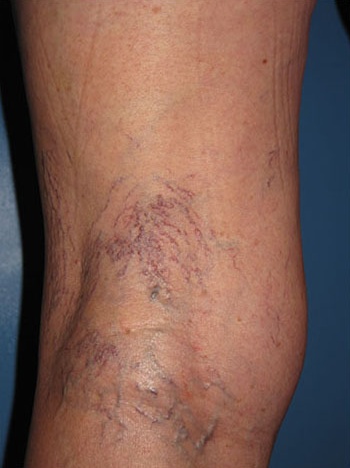
Whether you are dealing with a few small veins that bother you cosmetically or you are experiencing symptoms that have been affecting your daily life, Miller Vein is here to help. A vein evaluation is the first step, and it is easier to schedule than you might think.
Book your consultation with Miller Vein today and find out exactly what is going on with your veins and what can be done about it.
Spider veins, also known as telangiectasias, are tiny, red, purple, or blue blood vessels that appear near the surface of the skin. They can...
Read BlogWe know you’ve all heard, “Head, shoulders, knees, and toes…” But we’re here to talk about veins. If you have spider veins on your...
Read BlogPrefer a call? Fill out the form below, and our team will reach out to help you coordinate your visit.
"*" indicates required fields
Save time by selecting your own appointment slot through our secure scheduling portal.