








 Browse all of our latest insights and updates.
 Ready to Schedule?
Save time by selecting your own appointment slot through our secure scheduling portal.


A wound that refuses to heal is more than a physical inconvenience. It is a signal that something deeper is going on in your body, and it deserves more than basic first aid. Chronic leg wounds can be painful, discouraging, and disruptive to daily life, but they are not something you simply have to endure.
At Miller Vein, we specialize in identifying and treating the root causes of chronic leg wounds, not just the wounds themselves. By addressing the underlying conditions that prevent healing, whether that is poor circulation, venous insufficiency, or another contributing factor, we help patients achieve faster recovery, reduced discomfort, and lasting protection against future complications.
Modern care has come a long way — see leg wound treatment options for what treatment involves.
Our board-certified specialists serve patients at clinics throughout Michigan, including Auburn Hills, Dearborn, Grand Rapids, Holland, Macomb, Novi, St. Clair Shores, and Troy.
Curious to learn more? Read a simple guide to wound healing on our blog.
Leg wounds become chronic when the body’s natural healing process is unable to complete its work on a normal timeline. While a minor cut or scrape typically closes within days, a chronic leg wound is one that fails to heal within four to six weeks despite basic care. These wounds can linger for months or years, and without identifying and treating the underlying cause, they often worsen over time.
There are several distinct types of chronic leg wounds, and understanding the differences matters because each type has a different cause and requires a different treatment approach.
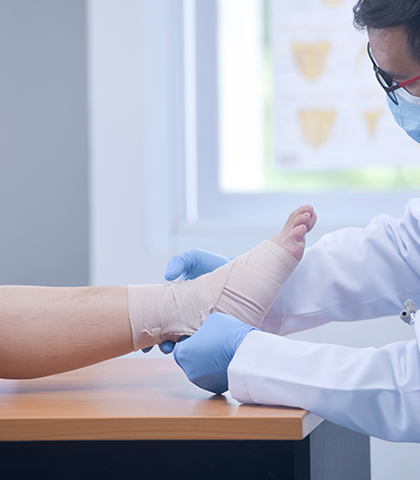
Venous ulcers are the most common type of chronic leg wound, making up the majority of all leg ulcers seen in our practice. They develop as a consequence of venous insufficiency, a condition in which the one-way valves inside the leg veins fail to function properly. When those valves weaken or fail, blood flows backward and pools in the lower legs rather than returning efficiently to the heart.
Your provider may also recommend complete decongestive therapy where appropriate.
Over time, this pooling creates elevated pressure within the veins and surrounding tissue. Fluid, red blood cells, and inflammatory proteins leak out into the tissue. The skin is deprived of adequate oxygen and nutrients, becomes fragile and inflamed, and eventually breaks down. The result is an open sore, most commonly located on the inner ankle or lower leg, that the body struggles to close because the pressure driving it has not been resolved.
Venous ulcers tend to have shallow, irregular borders with surrounding skin that is often discolored, thickened, or weeping. They produce moderate to significant wound fluid and are typically accompanied by leg swelling and aching.
Arterial ulcers have the opposite underlying cause. Rather than blood pooling due to poor venous outflow, arterial ulcers develop when blood cannot reach the tissue adequately due to narrowed or blocked arteries, a condition called peripheral arterial disease (PAD). Without sufficient blood supply, the tissue is starved of oxygen and begins to break down.
Arterial ulcers tend to appear on the toes, the outer ankle, or the tops of the feet. They typically have well-defined, punched-out borders and a pale, grey, or necrotic wound bed. The surrounding skin is often cool, hairless, and shiny. Pain from arterial ulcers is often significant and characteristically worsens when the leg is elevated, since gravity can no longer assist blood flow to the foot.
Diabetes creates a particularly challenging environment for wound healing. Diabetic peripheral neuropathy reduces sensation in the feet, meaning that small injuries, friction points, or pressure from ill-fitting shoes may go completely unnoticed until significant damage has already occurred. At the same time, impaired immune function and reduced tissue perfusion associated with diabetes slow the healing process substantially.
Diabetic foot ulcers most commonly develop at pressure points on the sole of the foot. Because neuropathy can eliminate pain in the affected area, they are often not noticed until they are well established. This makes regular foot inspection a critical habit for anyone with diabetes.
Pressure injuries, sometimes called pressure sores or decubitus ulcers, form when sustained pressure on a specific area of the body restricts blood flow to the skin and underlying tissue. They are most common in people with limited mobility and typically develop over bony prominences such as the heel, ankle, or lower leg. The compromised tissue breaks down progressively if the pressure is not relieved.

The front desk personnel were very professional and welcoming. I was seen by one of the most welcoming and patient ultrasound technicians. She was very pleasant and informative. She explained every step and made me feel comfortable throughout the exam. The doctor is the reason the office is so calm and welcoming. The doctor was informative as she explained the diagnosis and plan of care needed. I would definitely refer someone in need of their services.
I was not sure if I would like it here, and that was only because of my past experience with another clinic. This place here was very nice. They took their time with me. Made me feel very comfortable. Especially when the Doctor gave me the treatment plan, I was so happy with it. Thank you everyone at Miller Vein clinic you’re the best.
Great Clinic! So glad I went. My legs feel so much better! I can already see some of the benefits and will just get better over time! The doctors and staff are so kind and friendly. Such an easy location with lots of free parking. Highly recommend!!
My experience was amazing. I got there a little bit early, I was taken right back. Everybody was very nice, explained everything to me as they went. I would recommend Miller Vein to anybody; they are fantastic.


When a wound is chronic, it means the healing process has stalled. The body has not lost the ability to heal, but something is actively getting in the way. Understanding what that something is makes all the difference.
This is why at Miller Vein, our approach goes beyond wound dressings and surface care. We evaluate and address the underlying circulatory cause so that the wound has the conditions it needs to actually heal.
Chronic leg wounds do not develop randomly. Several well-established conditions and lifestyle factors increase a person’s risk significantly. Knowing your risk profile is one of the most useful things you can do to protect yourself from developing a wound or catching one early before it becomes a serious problem.
CVI is the single most important risk factor for venous leg ulcers. When the valves in the leg veins fail and blood pools in the lower legs, the sustained tissue pressure gradually damages the skin from within. The longer vein disease goes untreated, the more vulnerable the lower leg becomes to breakdown.
Diabetes contributes to chronic wound risk through multiple mechanisms at once. Peripheral neuropathy removes the warning signal of pain, meaning minor injuries or pressure points go unnoticed until significant damage has already occurred. Reduced immune function impairs the body’s ability to fight infection. Poor peripheral circulation limits tissue perfusion, and elevated blood glucose interferes directly with cellular repair processes.
A prior DVT can permanently damage the valves of the deep venous system as the clot resolves, leaving behind chronic venous hypertension that persists long after the original clot is gone. This complication is a driver of venous leg ulcers in patients who may not connect a wound they have today to a clot they experienced years earlier.
Excess body weight increases the pressure placed on the veins of the pelvis and lower legs, worsens venous insufficiency, and impairs the lymphatic drainage that helps clear excess fluid from the tissue. Obesity also reduces mobility, which diminishes the calf muscle pump that plays a critical role in returning blood from the legs to the heart.
The calf muscle pump is one of the body’s most important defenses against venous pooling. People who are largely sedentary, bedridden, or have limited ankle mobility lose the benefit of this pump, allowing venous pressure to build progressively over time.
A history of previous leg ulcers is one of the strongest predictors of future ulceration. Healed ulcer sites are typically covered by scar tissue that is less durable and resilient than intact skin, making those areas significantly more susceptible to breakdown.
Smoking impairs peripheral circulation, reduces the amount of oxygen available to the tissue, slows cellular repair, and increases vascular inflammation. It both accelerates the progression of underlying vascular disease and makes wounds that have already formed harder and slower to heal.
As the body ages, vein walls and valves lose elasticity, skin becomes thinner and more fragile, and the healing response slows. The cumulative effects of decades of venous pressure, hormonal changes, and physical wear make chronic leg wounds increasingly common from middle age onward.
Chronic leg wounds rarely appear without prior warning. For venous ulcers in particular, there is typically a recognizable progression of skin and tissue changes that precedes wound formation. Catching these early signs provides an important opportunity to intervene before an ulcer develops.
Do not wait on any of these urgent signs. Infection in a chronic wound can escalate quickly and may require immediate medical attention.
For patients with venous leg ulcers, treating the underlying vein disease is not optional. It is the most important intervention available.
Clinical evidence consistently shows that patients who receive endovenous treatment for the reflux driving their ulcer heal faster and experience significantly lower rates of recurrence than those who receive wound care alone. The venous hypertension that created the ulcer does not resolve by itself, and wound dressings, however carefully applied, cannot counteract the tissue-level environment that sustained pressure creates.
When venous reflux is corrected, the pressure in the surrounding tissue drops, oxygen and nutrient delivery to the skin improves, inflammatory activity decreases, and the wound gains the biological conditions it needs to close and stay closed. For many patients, venous treatment is the turning point after months or years of slow or absent progress with wound care alone.
At Miller Vein, addressing the vascular root cause is the foundation of everything we do for patients with chronic leg wounds. Our board-certified physicians perform minimally invasive, in-office procedures with no surgical incisions and minimal recovery time, making treatment accessible even for patients who have been managing a wound for an extended period.
The majority of venous leg ulcers are preventable. The key is recognizing and treating the conditions that lead to them before tissue breakdown occurs.
Endovenous treatment of chronic venous insufficiency reduces venous hypertension at its source and significantly lowers the risk of ulcer development. Patients who address vein disease before skin changes appear or progress have a much lower lifetime risk of ulceration than those who manage symptoms conservatively until a wound forms.
For patients with known CVI, daily use of graduated compression stockings is the single most effective preventive measure available. Compression reduces tissue pressure throughout the day, slows disease progression, and has a well-documented protective effect against ulcer formation and recurrence.
Regular moisturizing with appropriate products maintains skin integrity and reduces fragility.
Regular walking activates the calf muscle pump, which plays a critical role in venous return. Even short, frequent walks throughout the day meaningfully reduce the venous pooling that drives tissue damage over time.
Controlling blood glucose in diabetes, following up on any history of DVT, managing body weight, and quitting smoking all reduce the cumulative vascular risk that leads to chronic wounds.
If you have CVI, a history of prior ulceration, or significant risk factors, make visual inspection of your lower legs and ankles a regular habit.
Miller Vein provides expert evaluation and treatment for chronic leg wounds at eight convenient locations throughout Michigan. We see patients at:







Wound healing is a fascinating and complex process that our bodies go through to repair damaged tissues. Whether it’s a small cut or a...
Read BlogWe’re proud to welcome Dr. Madeline Paquette, DNP, to our team as our newest leg wound care provider. Dr. Paquette brings exceptional clinical expertise,...
Read BlogPrefer a call? Fill out the form below, and our team will reach out to help you coordinate your visit.
"*" indicates required fields
Save time by selecting your own appointment slot through our secure scheduling portal.
