



 Browse All Of Our Latest Insights
 Ready to Schedule?
Save time by selecting your own appointment slot through our secure scheduling portal.


Lymphedema is a chronic condition, but chronic does not mean unmanageable. With the right care and a treatment program built around your specific needs, lymphedema can be controlled in ways that meaningfully restore comfort, mobility, and quality of life.
At Miller Vein, we are proud to be the first and only vein clinic in Michigan to offer on-site Certified Lymphedema Therapy. Our dedicated in-house program brings together the gold-standard treatment approach for lymphedema with the vascular expertise needed to address any underlying vein disease contributing to your condition. If you have been managing lymphedema with limited support, or if you are newly diagnosed and looking for a clear path forward, we are here to help.
Before choosing a treatment, it helps to learn more about lymphedema and how it progresses.
We see patients at clinics across Michigan in Auburn Hills, Dearborn, Grand Rapids, Holland, Macomb, Novi, St. Clair Shores, and Troy.
Depending on your veins, your provider may combine this with our CDT program for the best result.
Lymphedema is a chronic condition in which excess fluid accumulates in the soft tissues of the body, typically the arms or legs, because the lymphatic system is unable to drain it properly. The lymphatic system is a network of vessels and nodes throughout the body responsible for collecting fluid from the tissues and returning it to the bloodstream. When this system is damaged, blocked, or overwhelmed, fluid builds up and causes the persistent swelling characteristic of lymphedema.
Lymphedema requires specialized treatment for a straightforward reason: it does not respond to standard medical care the way other types of swelling do. Elevation, rest, and diuretics do not address the underlying lymphatic dysfunction. Without a targeted, therapist-led treatment program, lymphedema tends to worsen over time, leading to progressive tissue changes, increased infection risk, reduced mobility, and a significant decline in quality of life.
Equally important is recognizing that lymphedema is often linked to an underlying vein condition. Chronic venous insufficiency (CVI) is one of the most common causes of secondary lymphedema in the legs. When the veins cannot return blood to the heart efficiently, the resulting excess fluid in the tissue overburdens the lymphatic system over time. Treating the vein disease is an essential part of comprehensive lymphedema care, which is why Miller Vein’s combined vascular and lymphedema expertise makes us uniquely positioned to help.
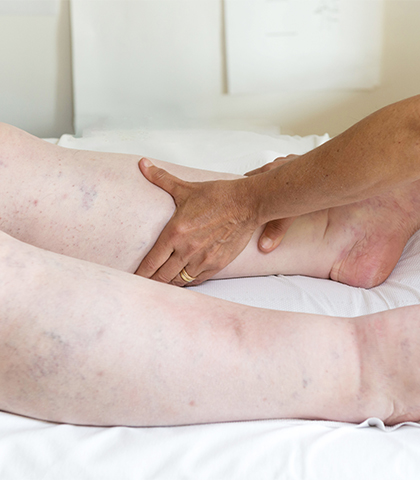
The gold standard for lymphedema treatment is Complete Decongestive Therapy (CDT), a comprehensive, multi-component program delivered through our Certified Lymphedema Therapy program (CLT). CDT is the most evidence-supported approach available for managing lymphedema and is the foundation of everything we do for our lymphedema patients.
Worried about cost? Review our coverage and CareCredit details — most medically necessary vein care is covered.
CDT is structured around two phases that together address both the active reduction of swelling and the long-term maintenance of results.
The decongestive phase is the intensive treatment phase, focused on actively reducing existing swelling, softening fibrotic tissue changes, and improving the condition of the skin. During this phase, patients typically attend therapy sessions several times per week.
Each session in the decongestive phase incorporates a combination of the following components, tailored to the individual patient’s presentation and goals.
Once swelling has been reduced to a stable level, treatment transitions into the maintenance phase. The focus shifts from active reduction to empowering the patient to sustain and build on the progress made during Phase One through a personalized self-management program.
Our CLTs work closely with each patient during this transition, providing thorough training and ongoing support to ensure the shift to home-based management is confident and well-prepared. The maintenance program typically includes compression garment use, a home exercise routine, daily skin care practices, and education on recognizing and responding to early signs of flare-ups.

The front desk personnel were very professional and welcoming. I was seen by one of the most welcoming and patient ultrasound technicians. She was very pleasant and informative. She explained every step and made me feel comfortable throughout the exam. The doctor is the reason the office is so calm and welcoming. The doctor was informative as she explained the diagnosis and plan of care needed. I would definitely refer someone in need of their services.
The staff was wonderful and really took my concerns and put my mind at ease. I would definitely recommend them to everyone. Staff on time, and had my ultrasound done and saw the doctor and was out of the office start to finish 90 minutes, was first visit. The Dearborn office was wonderful.
My experience was wonderful. The blonde lady at the front desk was so nice and friendly and so were the ladies who took me to the exam room and the one who did my ultrasound. The Dr was great. She explained everything to me thoroughly and was very compassionate. Will definitely send friends and family to that office.
The office was clean and very visually appealing. The staff were all courteous and professional. Each part of the exam was well described prior to it happening. The doctor listened intently and explained thoroughly. This was an enjoyable experience putting my anxiety at ease.


For many patients with lymphedema in the legs, chronic venous insufficiency is either the primary cause or a significant contributing factor. When the leg veins are unable to return blood to the heart efficiently, the resulting increase in tissue fluid places a sustained burden on the lymphatic system. Over time, this overwhelms the lymphatic vessels and leads to or worsens secondary lymphedema.
Treating lymphedema without addressing the underlying vein disease, when present, limits how much improvement is achievable. Venous hypertension continues to generate excess fluid, making it harder for lymphedema therapy to reduce swelling to a stable level and harder to maintain that level over time.
At Miller Vein, our board-certified vein physicians perform gentle in-office venous ablation procedures that correct the faulty vein valves driving the venous component of the problem. These quick, low-downtime procedures reduce venous pressure in the lower leg, creating a significantly better circulatory environment for lymphedema therapy to work in.
This integrated approach, vascular treatment combined with Certified Lymphedema Therapy under the same roof, is what makes Miller Vein’s program different from a standard lymphedema clinic or a standard vein clinic operating independently.
Starting a lymphedema treatment program is a meaningful commitment, and we want every patient to come in with a clear, honest picture of what the process involves and what they can realistically expect.
Your first appointment is a comprehensive evaluation with one of our Certified Lymphedema Therapists. We assess the affected limb or limbs in detail, take baseline measurements, review your medical history and the circumstances of your lymphedema, evaluate your skin condition, and discuss your goals and daily challenges. If vein disease is suspected as a contributing factor, a vascular assessment is coordinated as part of the workup.
Based on the evaluation, your CLT develops an individualized CDT program tailored specifically to your presentation. During the decongestive phase, you will typically attend sessions multiple times per week. Most patients begin noticing meaningful reductions in swelling within the first few weeks of consistent treatment, though the pace varies depending on the stage and duration of the condition.
As treatment progresses and swelling stabilizes, the program transitions into the maintenance phase with a gradual reduction in session frequency and an increasing focus on equipping you to manage independently. Our CLTs remain available for follow-up throughout and will work with you to adjust the program as your needs evolve.
Lymphedema is a long-term condition, and managing it well is an ongoing commitment. But with the right program in place, most patients experience a quality of life that is significantly better than what they had before treatment.
Certified Lymphedema Therapy is delivered at our Auburn Hills clinic, serving patients from across our Michigan locations, with the program expanding as we add therapists. We see patients at:
Our clinics are open Monday through Friday, 7:00 AM to 5:30 PM.






May is Mental Health Awareness Month, and it’s the perfect time to remind ourselves that lymphedema affects more than just physical health. If you...
Read BlogLipedema is a chronic condition that causes an abnormal buildup of fat, primarily in the legs and arms. This can lead to pain, swelling,...
Read BlogPrefer a call? Fill out the form below, and our team will reach out to help you coordinate your visit.
"*" indicates required fields
Save time by selecting your own appointment slot through our secure scheduling portal.
