
Ready to Schedule?
Save time by selecting your own appointment slot through our secure scheduling portal.


Medically reviewed by Dr. Jeffrey Miller
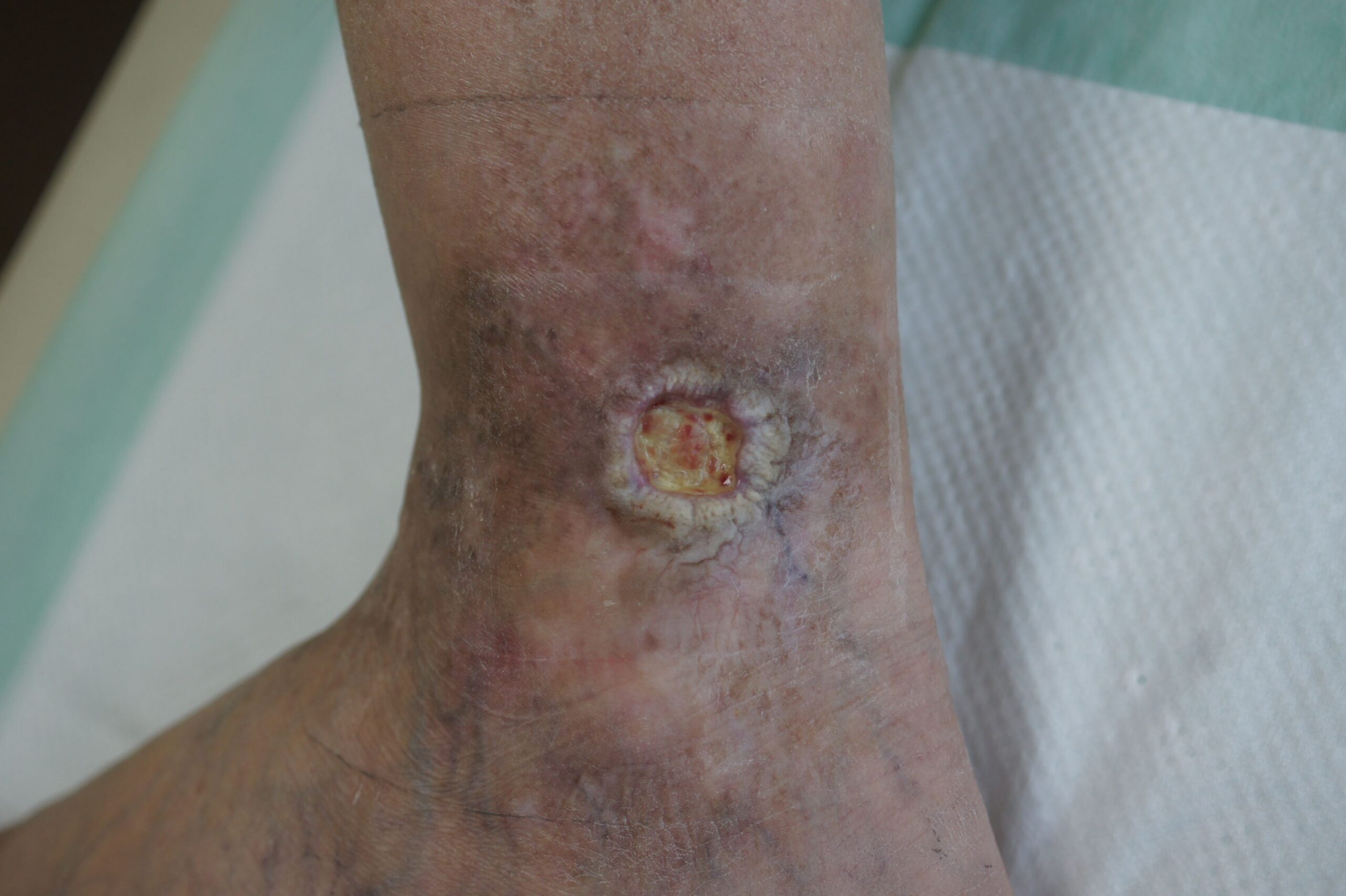
If you have searched for pictures of venous stasis ulcers, you are likely trying to understand whether what you are seeing on your own leg or a loved one’s leg matches something that needs medical attention. Venous stasis ulcers are open wounds that develop when poor circulation in the veins prevents the skin from healing properly, and recognizing their appearance is an important first step toward getting the right care. This page describes what these wounds look like at different stages, what warning signs to watch for before an ulcer forms, and your options if you are concerned. If anything on this page sounds familiar, our board-certified vein specialists are here to help. Reach out to us today to schedule a consultation!
When patients search for pictures of venous stasis ulcers, they are often trying to identify where their wound falls on a spectrum from early warning signs to a fully developed ulcer. Understanding that progression can help you decide how quickly to seek care.
Before an ulcer forms, the skin around the lower leg and ankle typically changes. You may notice a reddish-brown or rust-colored discoloration, sometimes described as staining or hemosiderin deposits, which form when red blood cells leak into the tissue. The skin may feel thickened, leathery, or itchy. Some patients describe a condition called lipodermatosclerosis, where the lower leg takes on an inverted bottle shape as the tissue hardens. These changes signal that chronic venous insufficiency may be affecting the tissue, and acting at this stage is significantly easier than waiting for an open wound to develop.
A venous stasis ulcer most commonly appears on the inner ankle or the lower leg just above the ankle bone, an area clinicians call the gaiter zone. The wound typically has irregular, shallow edges with a moist, red or pink wound bed. The surrounding skin often appears swollen, discolored, and fragile. Unlike arterial ulcers, which tend to have a punched-out appearance and may feel painful at rest, venous ulcers are often associated with a dull aching or heaviness that may actually improve somewhat when the leg is elevated. Drainage is common. The wound may have a fibrinous yellow coating over portions of the bed. Our leg wound treatment program addresses both the wound itself and the underlying venous cause.
Without treatment of the underlying vein problem, venous stasis ulcers have a high rate of recurrence. A chronic wound may appear partially healed at times, with new pink tissue forming at the edges, only to reopen when circulation remains inadequate. In long-standing cases, the surrounding skin can become deeply pigmented and scarred. Wound size varies considerably, ranging from small coin-sized areas to wounds covering a significant portion of the lower leg. Any new, worsening, painful, or nonhealing lower-leg wound should be evaluated promptly—especially if there is redness, warmth, drainage, fever, increasing pain, or skin discoloration. Please seek urgent care immediately if you notice rapidly spreading redness, fever, severe or worsening pain, foul-smelling drainage, black or blue discoloration of the skin, sudden marked swelling, or shortness of breath or chest pain. These signs can indicate a serious infection or blood clot that needs prompt medical evaluation.
Pictures of venous stasis ulcers tell only part of the story. Understanding the underlying mechanism helps patients understand why these wounds form and why they heal slowly without targeted treatment.
Venous stasis ulcers are most commonly a complication of chronic venous insufficiency, a condition in which the valves inside the leg veins no longer close properly. When those valves fail, blood pools in the lower leg instead of returning efficiently to the heart. The resulting pressure buildup, called venous hypertension, causes fluid to leak into surrounding tissue, deprives the skin of adequate oxygen and nutrients, and creates conditions where even minor trauma or friction can trigger an open wound that resists healing. Venous ulcers may be associated with superficial or deep venous reflux, venous obstruction—including prior DVT-related disease—or a combination of these factors.
Several factors increase a person’s likelihood of developing a venous stasis ulcer. These include a personal or family history of varicose veins, a prior blood clot in the deep veins of the leg, obesity, prolonged periods of standing or sitting, previous leg injuries, and advancing age. Conditions that cause or worsen leg swelling, particularly lymphedema, can complicate wound healing. Our practice offers lymphedema and lipedema care in Michigan as part of a comprehensive approach to leg health. At Miller Vein, every medical patient receives an ultrasound during the consultation so we can accurately identify underlying venous disease before recommending treatment.
If the pictures of venous stasis ulcers you reviewed look similar to what you or someone you care for is experiencing, the next question is usually: what does evaluation actually involve? Knowing what to expect can reduce anxiety and help you take that first step with confidence.
Miller Vein’s core philosophy is diagnosis before treatment, and treatment only when appropriate. Our board-certified vein specialists will never recommend a procedure unless the clinical evidence supports it. Evaluation typically includes examination of the wound and circulation, duplex ultrasound to evaluate venous reflux or obstruction, and assessment for arterial disease when indicated. Our practice has earned the trust of more than 3,500 referring physicians across Michigan, many of whom send their patients specifically because of this commitment to accurate, ethical diagnosis.
One of the most common concerns patients have is whether insurance will cover care. The evaluation and management of venous leg ulcers is typically covered by insurance, as is the treatment of the chronic venous insufficiency underlying the wound. Miller Vein accepts more than 700 insurance plans. You can learn more about insurance coverage for vein care on our dedicated insurance page. All procedures are performed in the office, and most medical treatments are completed in less than 30 minutes, allowing patients to return to their normal routine afterward.
Patients in the Farmington Hills area and throughout Southeast Michigan can access multiple Miller Vein locations nearby, including offices in Novi, Troy, and Auburn Hills. Miller Vein is an independent, physician-led practice with eight locations across Michigan and is proud to have earned more than 2,750 five-star Google reviews from patients. Our board-certified vein specialists bring extensive experience diagnosing and managing venous stasis ulcers and the underlying conditions that cause them. Crain’s Detroit Business recognizes us as one of Michigan’s best places to work, reflecting the standard of care we bring to every patient interaction. Our promise is straightforward: we will never recommend an unnecessary procedure.
Venous stasis ulcers most often appear on the lower leg near the inner ankle, have shallow irregular edges, and are surrounded by discolored or swollen skin. They are typically associated with a dull aching or heaviness in the leg. However, several types of wounds can look similar, and an accurate diagnosis requires a clinical evaluation and ultrasound imaging. If you are unsure, consulting a board-certified vein specialist is the most reliable way to get a clear answer.
In some cases, a venous stasis ulcer may improve partially with compression and wound care, but it is unlikely to heal fully or stay healed without addressing the underlying venous insufficiency. Research suggests that treating the source of venous hypertension significantly improves healing rates and reduces the likelihood of recurrence. Patients who delay treatment often experience wounds that reopen repeatedly over months or years.
During your consultation at Miller Vein, a board-certified specialist will review your history and symptoms, examine the affected area, and perform a duplex ultrasound to assess circulation in the leg. This imaging is included in the medical consultation for all patients. You will receive a clear explanation of what the findings show and, if treatment is appropriate, a recommendation based on your specific situation. We recommend no procedures without clinical evidence to support them.
If reviewing pictures of venous stasis ulcers has prompted concern about what you are seeing on your own leg, patients near the Farmington Hills, Michigan area can access board-certified vein specialists at several nearby Miller Vein locations. Our team will give you an honest, thorough evaluation and a clear explanation of your options. Visit our website to find the location nearest to you and schedule your consultation today.
Prefer a call? Fill out the form below, and our team will reach out to help you coordinate your visit.
"*" indicates required fields
Save time by selecting your own appointment slot through our secure scheduling portal.
