Ready to Schedule?
Save time by selecting your own appointment slot through our secure scheduling portal.


Medically reviewed by The Miller Vein Team
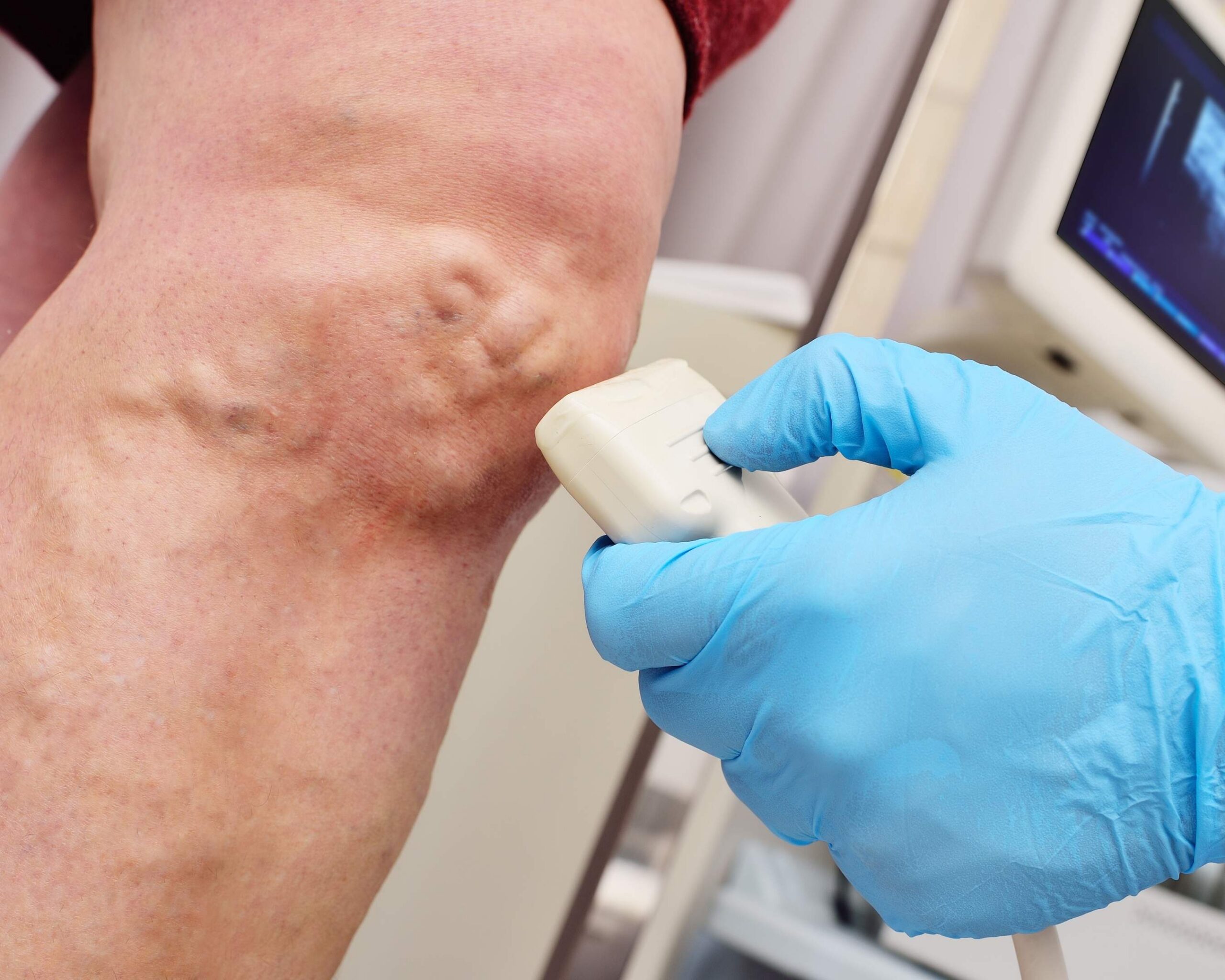
Chronic venous disease (CVD) is a common condition that affects the veins in our legs, leading to various skin changes, leg pain, discomfort, and potentially visible veins or leg ulcers.
A recent study published in the journal Phlebology explores (1) how ultrasound technology can help us better understand skin changes and (2) why ultrasound imaging at the first sign of skin changes is crucial.
Don’t wait for symptoms to worsen — modern care is quicker than most people expect; start with DVT check appointments.
CVD happens when the veins in our legs don’t work properly, causing blood to pool and increase pressure in the veins. This can lead to visible symptoms like varicose veins, swelling, skin discoloration, and even ulcers. These symptoms can significantly impact a person’s quality of life and require frequent medical attention.
Our guide to recognizing a possible blood clot is a good place to start.
Ultrasound is a non-invasive imaging technique that uses sound waves to create pictures of the inside of the body. In this study, researchers used ultrasound to examine the skin and soft tissue changes in patients with CVD. They focused on different layers of the skin, including the cutaneous layer (CL), subcutaneous layer (SCL), and the dermo-hypodermal junction (D-HJ).
The study involved 54 patients with chronic venous disease (CVD), and a total of 98 limbs were evaluated using ultrasound. Here are some of the key findings:
Understanding these skin changes is crucial for managing chronic venous disease (CVD) effectively. Early detection of skin changes using ultrasound can help doctors intervene sooner, potentially preventing the condition from worsening. It also provides a more accurate assessment of the severity of the disease, which can guide treatment decisions.
The study highlights the importance of using ultrasound as a tool for assessing skin changes in CVD. By incorporating ultrasound into routine clinical practice, healthcare providers can gain valuable insights into the condition and tailor treatments to individual patients’ needs.
In conclusion, this study sheds light on the hidden changes in the skin caused by chronic venous disease and underscores the potential of ultrasound in improving patient care. Early detection and intervention can make a significant difference in the lives of those affected by CVD.
Reference: Girdhani, B., Savlania, A., Vaddavalli, V. V., Behera, A., Gorsi, U., Kaman, L., & Soundarajan, R. (2024). Assessment of skin and associated soft tissue changes with ultrasonography in chronic venous disease. Phlebology, 39(2), 125–131. https://doi.org/10.1177/02683555231211404
Prefer a call? Fill out the form below, and our team will reach out to help you coordinate your visit.
"*" indicates required fields
Save time by selecting your own appointment slot through our secure scheduling portal.
