Ready to Schedule?
Save time by selecting your own appointment slot through our secure scheduling portal.


Medically reviewed by Miller Vein
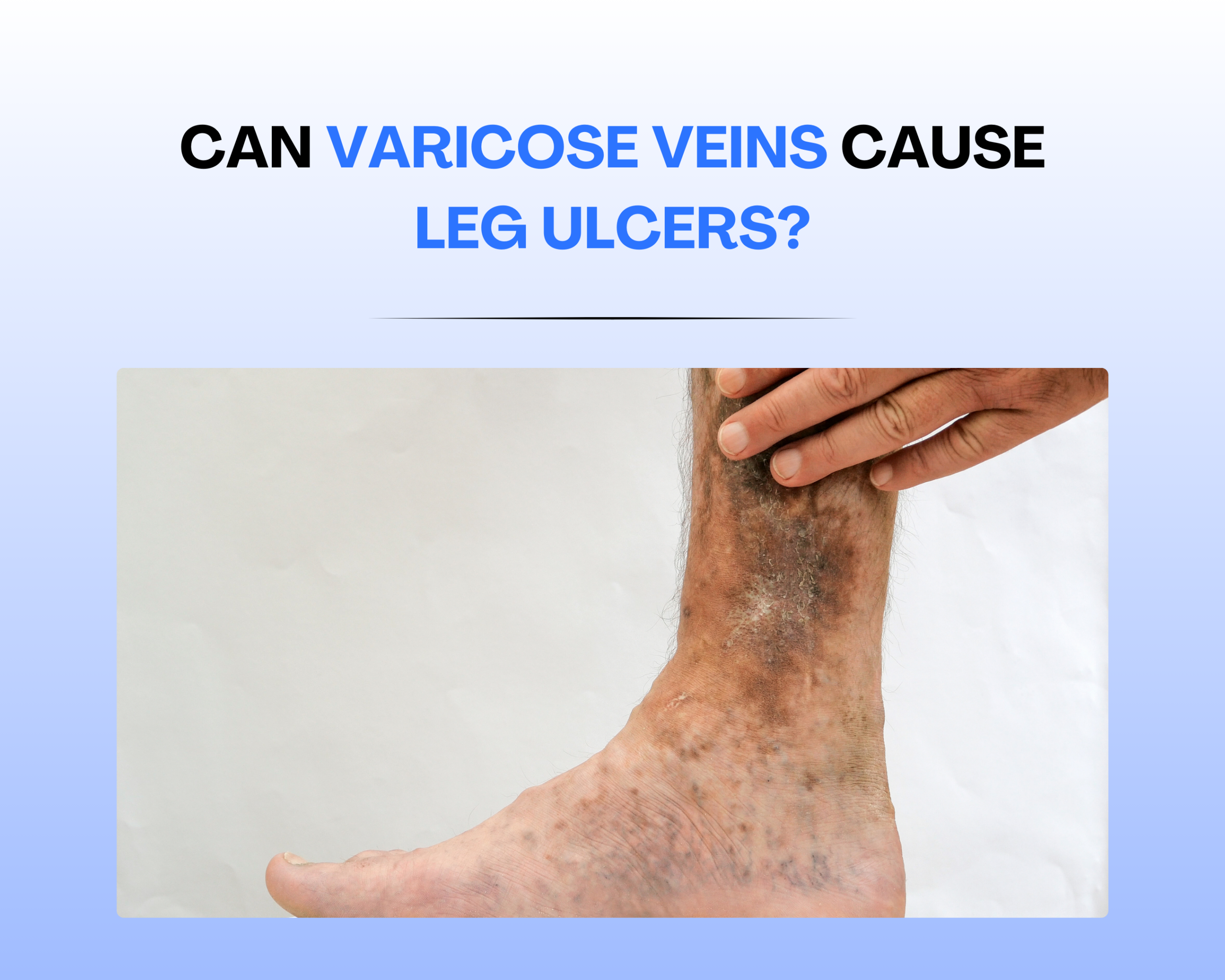
We know that varicose veins are those large, rope-like veins on your legs. But what are ulcers? And are they related to varicose veins?
We’re here to help you understand the connection between varicose veins and venous leg ulcers.
Miller Vein offers varicose vein treatment choices at all eight of our Michigan clinics.
Please note that some images referenced in the original article reflect skin changes prior to the development of a leg ulcer. If your skin shows similar changes, it’s time to schedule a consultation.
Still have questions? See varicose veins explained for the bigger picture.
Varicose veins occur when the valves inside the leg veins stop working properly. Instead of blood flowing smoothly back to the heart, it pools in the veins, causing them to stretch, twist, and bulge.
Over time, this increased pressure affects not just the veins, but also the surrounding skin and tissue.
Venous leg ulcers (VLUs) fall under the umbrella term of “leg wounds.” Other types of leg wounds are arterial ulcers and pressure sores. They can arise due to poor circulation or diabetes as well. If not taken care of properly, it can take weeks or months for a leg wound to heal.
Leg ulcers caused by vein disease are called venous ulcers. They usually develop near the ankle and can be slow to heal. Here’s how varicose veins can lead to them:
Absolutely. While the risk of developing venous leg ulcers is higher if you have varicose veins, there are ways to be proactive in the hopes of preventing them:
Varicose veins are more than those large, rope-like veins on your legs. When they are left untreated, they can damage the skin, impair circulation, and eventually lead to painful venous leg ulcers. Paying attention to early warning signs and taking preventative measures can make a big difference in preventing complications.
With a dedicated wound-care provider on site, Miller Vein is a great resource for information on venous leg ulcers, and we can provide expert treatment.
If you’re interested in learning more about Miller Vein’s treatment methods for leg ulcers, click here.
Johns Hopkins Medicine. (n.d.). Venous ulcers. https://www.hopkinsmedicine.org/health/conditions-and-diseases/venous-ulcers
Prefer a call? Fill out the form below, and our team will reach out to help you coordinate your visit.
"*" indicates required fields
Save time by selecting your own appointment slot through our secure scheduling portal.
