Ready to Schedule?
Save time by selecting your own appointment slot through our secure scheduling portal.


Medically reviewed by Dr. Jeffrey Miller
Medically reviewed by Dr. Jennifer Malicke
If you are living with varicose veins, you have likely heard that compression socks may help, but you may also have questions about how they work, whether they are right for you, and what they can and cannot do.
Understanding the relationship between compression socks and varicose veins is an important first step in making confident, informed decisions about your vein health. This page is designed to give you clear, honest answers, so you can approach your care from a place of knowledge rather than uncertainty. If you would like to speak with a board-certified vein specialist at Miller Vein, call us today to schedule a consultation.
Have questions? Contact Miller Vein to speak with a care coordinator at a location near you.
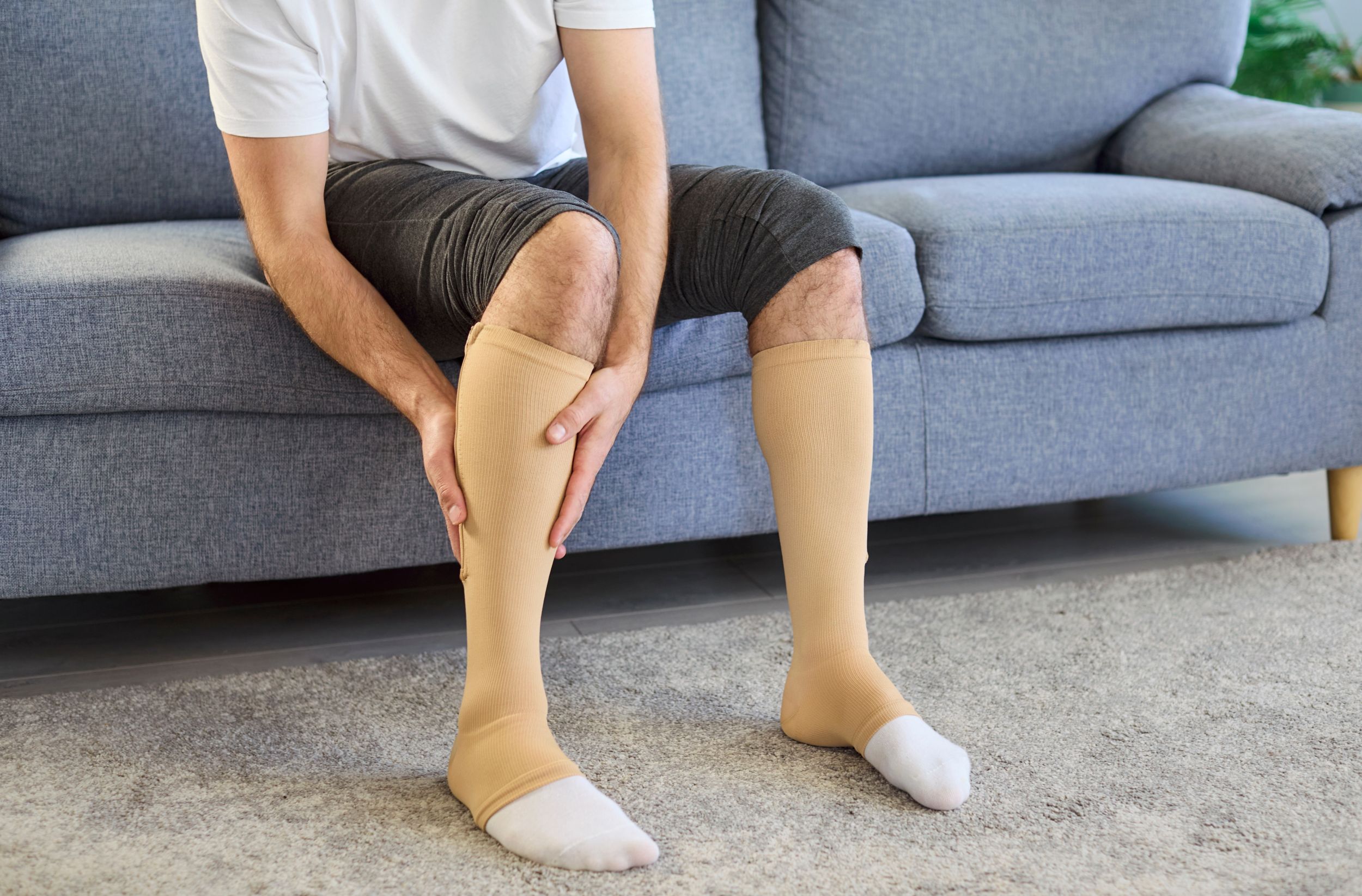
Varicose veins develop when the small valves inside leg veins weaken or stop functioning properly. Instead of pushing blood efficiently back toward the heart, these compromised valves allow blood to pool in the lower leg, causing veins to swell, bulge, and become visible beneath the skin. Compression socks and varicose veins management go hand in hand because compression garments apply graduated pressure to the leg, with the greatest pressure at the ankle that gradually decreases toward the knee. This external pressure may help encourage blood flow upward and reduce the tendency for blood to pool.
Research suggests that wearing appropriately fitted graduated compression stockings may help reduce common varicose vein symptoms such as aching, heaviness, swelling, and fatigue in the legs. For many patients, consistent use throughout the day may make a meaningful difference in day-to-day comfort. You can read more about the full range of symptoms associated with vein disease on our signs of chronic venous insufficiency page.
It is important to understand, however, that compression socks do not correct the underlying valve problem that causes varicose veins. They are a supportive tool, not a corrective one. At Miller Vein, our philosophy is built on accurate diagnosis before any treatment recommendation, which means your care plan is shaped by what your veins actually need, not by a one-size-fits-all approach.
For patients who are not yet ready for, or do not require, a procedure, compression stockings can be a meaningful part of daily vein management. They may help reduce visible swelling by the end of the day, lessen discomfort from prolonged standing or sitting, and slow symptom progression for some individuals. Compression garments are also commonly recommended before and after vein procedures as part of a complete care plan.
Patients managing related conditions, such as lymphedema, may also benefit from compression therapy as part of their broader treatment. Our team provides comprehensive lymphedema and lipedema care in Michigan, and compression plays a recognized role in those care pathways as well.
Compression socks will not make varicose veins disappear, and they will not repair damaged vein valves. If your symptoms are progressing, including increasing pain, skin changes near the ankle, or the development of leg wounds, compression alone may no longer be sufficient.
Leg wound treatment in Michigan is one of the specialized services our team provides when venous disease advances to that stage. Individual patient results may vary, and the right course of action depends on a thorough evaluation by a qualified vein specialist.
If you have been wearing compression socks consistently and your symptoms are not improving, or if your symptoms are worsening, it is time to speak with a board-certified vein specialist. At Miller Vein, all medical patients receive an ultrasound during their consultation, giving our specialists a clear, accurate picture of what is happening beneath the surface before any recommendation is made.
Not all compression socks are the same. Compression is measured in millimeters of mercury (mmHg), and the appropriate level depends on your specific condition and symptoms. Over-the-counter options typically range from 8 to 20 mmHg and may be appropriate for mild discomfort or preventive use. Medical-grade compression, often 20 to 30 mmHg or higher, is typically prescribed by a physician and is designed for patients with more significant venous disease.
Wearing compression that is too tight or improperly fitted can cause discomfort or, in rare cases, worsen circulation problems, so consulting with a specialist before selecting a garment is a reasonable step.
One concern many patients have is whether their vein care, including evaluation and treatment, will be covered by insurance. Miller Vein accepts many insurance plans, and many medically necessary varicose vein treatments may be covered. You can explore your options on our insurance coverage information page. Knowing that cost is not necessarily a barrier can make it easier to seek the evaluation you may need.
If you are researching compression socks and varicose veins because your symptoms are affecting your quality of life, that is a sign worth taking seriously. Varicose vein treatment in Michigan has advanced considerably, and many procedures are completed in less than 30 minutes in the office, with patients returning to their normal routines following treatment. Individual results may vary.
Miller Vein is a physician-led, independent vein care practice with eight locations across Michigan. Our vein specialists follow a clear principle: diagnosis before treatment, and treatment only when appropriate. That means you will never be pushed toward a procedure you do not need. All medical consultations include a diagnostic ultrasound, so our specialists understand exactly what is happening in your veins before making any recommendations.
With over 3,000 five-star Google reviews and the trust of more than 3,500 referring physicians across the state, Miller Vein has built a reputation for ethical, patient-centered care.
Whether you are exploring compression therapy or considering whether a procedure may be right for you, our team is here to help you make a confident, informed choice. Read what our patients have to say on our patient testimonials and reviews page.
Compression socks may help reduce symptoms such as swelling, aching, and heaviness associated with varicose veins, but they do not correct the underlying valve dysfunction that causes the condition. Veins that are already enlarged are unlikely to disappear with compression alone. If your goal is to address the appearance or the source of your varicose veins, a consultation with a board-certified vein specialist can help clarify your options. Individual results may vary.
Most specialists recommend wearing compression socks throughout the day, from morning until you are off your feet in the evening. The benefit comes from consistent daily use, particularly during extended periods of standing or sitting. Your vein specialist may provide specific guidance based on your diagnosis and the compression level prescribed. Wearing them overnight is generally not recommended unless specifically advised by your physician.
Coverage for compression garments varies by insurance plan and medical necessity. In many cases, compression therapy is recommended as an initial conservative treatment before insurance will authorize a vein procedure. Miller Vein accepts many insurance plans and can help you understand what your coverage may include. Visiting our insurance information page is a helpful starting point.
We have two Miller Vein Locations in West Michigan, one in Grand Rapids and one in Holland. We also have offices in Auburn Hills, Dearborn, Macomb, Novi, Troy, and St. Clair Shores. Our care coordinators can help you find the location that works best for your schedule.
If your symptoms are worsening despite consistent compression use, or if you are experiencing skin changes, leg wounds, significant pain, or increasing swelling, it is time to see a board-certified vein specialist. These may be signs that venous insufficiency is progressing and that a more targeted evaluation is needed. At Miller Vein, every medical consultation includes a diagnostic ultrasound so your care plan is based on accurate information, not guesswork. Call us to schedule.
If you are located in either Southeast or West Michigan, and have questions about compression socks and varicose veins or want to explore whether a vein evaluation is right for you, Miller Vein is here to help. Our board-certified specialists provide honest, diagnosis-first care at convenient locations across Michigan. Call us today to schedule your consultation and take the first confident step toward healthier legs.
Prefer a call? Fill out the form below, and our team will reach out to help you coordinate your visit.
"*" indicates required fields
Save time by selecting your own appointment slot through our secure scheduling portal.
