
Ready to Schedule?
Save time by selecting your own appointment slot through our secure scheduling portal.


Medically reviewed by Miller Vein
If you have been researching imaging for varicose veins, you have likely come across the term venous ultrasound. This diagnostic tool is one of the most important steps in understanding what is actually happening beneath the surface of your skin. Aching legs, visible bulging veins, and persistent swelling can signal a deeper circulatory problem, and a venous ultrasound helps a specialist see the full picture before recommending any course of action. At Miller Vein, board-certified vein specialists serving communities across Michigan use this technology as a foundational part of every medical vein consultation. If you have questions or are ready to take the next step, we invite you to give us a call.
Imaging for varicose veins begins with understanding what a venous ultrasound actually does. Unlike X-rays, venous ultrasound uses sound waves to create real-time images of your veins and the blood flowing through them. This allows a specialist to evaluate whether the valves inside your veins are functioning properly or whether blood is flowing backward, a condition known as venous reflux.
During the scan, a trained clinician will assess several key factors. These include the diameter of the vein, the presence and severity of reflux, the location of valve failure along the leg, and whether any signs of deep vein thrombosis may be present. Venous ultrasound can also help identify signs of chronic venous insufficiency, a condition in which sustained valve failure leads to increased pressure and progressive symptoms over time.
It is tempting to assume that visible varicose veins tell the whole story, but the most significant venous dysfunction often occurs in vessels that are not visible from the outside. A vein that looks manageable on the surface may be connected to a deeper source of reflux that, if left unaddressed, would cause any surface treatment to fail prematurely. This is precisely why imaging for varicose veins is not optional at Miller Vein. Every medical patient typically receives an ultrasound during their consultation, ensuring that no treatment recommendation is made without a clear and complete diagnostic picture. That commitment to diagnosis before treatment is the foundation of how our practice operates.
For many patients, the word “imaging” brings to mind large hospital machines and lengthy wait times. Venous ultrasound is a straightforward, in-office diagnostic study that typically takes less time than most patients expect.
No significant preparation is required. Patients are generally encouraged to stay well-hydrated and to wear or bring loose, comfortable clothing that allows easy access to the legs. A member of the clinical team will walk you through what to expect before the scan begins, so there is no guesswork involved.
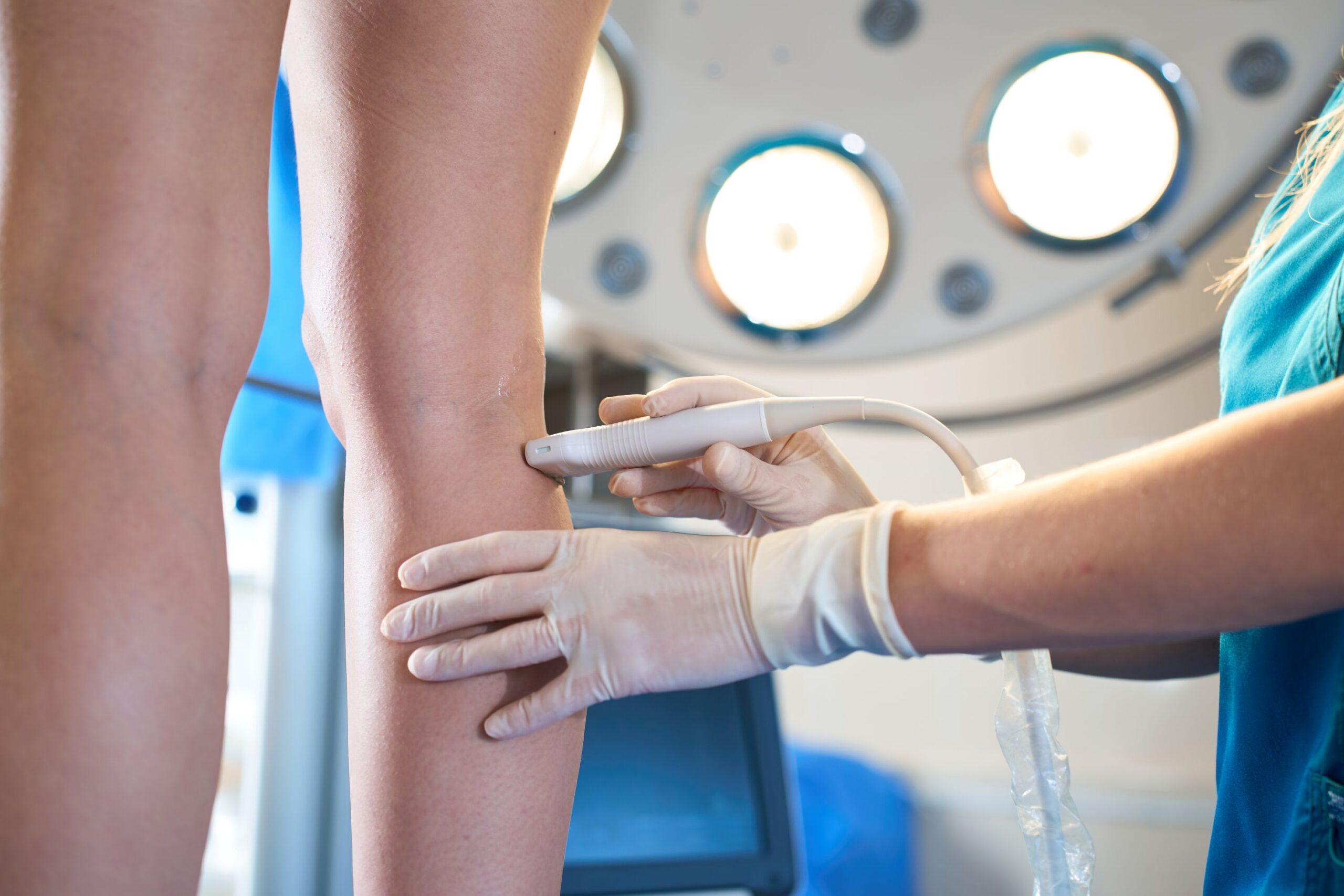
A handheld device called a transducer is gently moved along the surface of the leg. The scan is well-tolerated by most patients and does not require sedation or recovery time. You will likely be asked to stand during portions of the exam, as gravity helps reveal reflux patterns that might not be visible while lying down. The specialist conducting the scan will be looking at blood flow direction and valve competency in real time.
Once imaging for varicose veins is complete, your board-certified vein specialist will review the findings with you directly, in plain language. If reflux is detected, you will receive a clear explanation of what was found and what options may be appropriate. If the scan does not reveal a medically significant finding, our specialists will tell you that honestly, even if it means no treatment is recommended. It is worth noting that insurance coverage for venous ultrasound generally requires the presence of symptoms. Patients with no symptoms may not qualify for covered imaging, and our team will help you understand your specific situation before any costs are incurred. Miller Vein accepts more than 700 insurance plans; you can learn more about insurance coverage here.
Receiving the results of a venous ultrasound is not the end of the process; it is the beginning of a real conversation. Imaging for varicose veins provides the clinical evidence that guides every decision made from that point forward.
If your ultrasound reveals meaningful reflux or valve dysfunction, your specialist will discuss the treatment options that are most appropriate for your specific anatomy and symptom profile. Miller Vein offers a range of in-office procedures for varicose veins, including thermal and non-thermal, non-tumescent ablation approaches. All procedures are performed in the office, and most patients return to their normal routine after treatment. Medical procedures are typically completed in less than 30 minutes. You can explore the full range of options on our varicose vein treatment page.
Not every scan leads to a procedure, and that is intentional. If your venous anatomy does not warrant intervention, your specialist will tell you clearly and may instead discuss conservative measures, monitoring, or other supportive strategies. This honest, ethics-first approach is what distinguishes Miller Vein from practices that recommend procedures regardless of clinical necessity.
Venous ultrasound is also used to evaluate for deep vein thrombosis, a potentially serious condition involving clots in the deeper venous system. Additionally, some patients presenting with leg symptoms may also be navigating complex conditions such as lymphedema or lipedema. Miller Vein’s clinical team is experienced in evaluating these overlapping concerns, and you can learn more about lymphedema and lipedema care in Michigan on our dedicated page.
Patients throughout Southeast and West Michigan choose Miller Vein because of the practice’s unwavering commitment to honest, physician-led care. With eight locations across the state and a team of board-certified vein specialists, Miller Vein brings a level of experience and consistency that is difficult to find elsewhere. The practice has earned over 2,750 five-star Google reviews, and more than 3,500 referring physicians trust Miller Vein with their patients. Recognized by Crain’s Detroit Business as one of Michigan’s Best Places to Work, Miller Vein maintains a team culture that patients feel from the moment they walk in the door. Every patient receives a venous ultrasound during their medical consultation, and no procedure is ever recommended without a clear clinical reason to do so.
Venous ultrasound is well-tolerated by most patients. The study involves a handheld device moved gently over the surface of your leg along with a small amount of conductive gel. There is no radiation involved and no needles. Most patients find the process straightforward and are surprised by how quickly it is completed. If you have any concerns before your appointment, our team is happy to walk you through exactly what to expect.
Insurance coverage for venous ultrasound is typically available when a patient has documented symptoms such as pain, swelling, heaviness, or skin changes. If you have no symptoms, coverage may not apply. Miller Vein accepts more than 700 insurance plans and will help you understand your benefits before any services are provided. You are encouraged to ask about your specific plan during your consultation to avoid any surprises.
The duration can vary depending on how many veins need to be evaluated, but most venous ultrasound exams are completed within 30 to 60 minutes. There is no recovery time required afterward, and patients typically return to their normal activities the same day. Because all procedures and diagnostic imaging at Miller Vein are performed in the office, there is no need to schedule a separate hospital visit.
Many patients come to Miller Vein directly without a referral, though some insurance plans may require one. Our team will help you navigate this during your initial consultation. Miller Vein also works closely with more than 3,500 referring physicians across Michigan, so if your primary care provider has recommended a venous evaluation, we can coordinate your care seamlessly. Contact our team to clarify what your specific plan requires before your visit.
If imaging for varicose veins does not reveal significant reflux or valve dysfunction, your specialist will be transparent about those findings. Miller Vein’s promise is to never recommend an unnecessary procedure, and that commitment holds even when it means no treatment is the right answer. You may receive guidance on conservative approaches or monitoring. Individual results may vary, and your specialist will tailor their recommendations to your unique clinical picture.
If you are experiencing leg discomfort, visible varicose veins, or any symptoms that concern you, imaging for varicose veins is a logical, low-barrier first step toward answers. The board-certified specialists at Miller Vein are here to guide you with honesty and expertise. Give us a call or fill out our online contact form to schedule your consultation today.
Prefer a call? Fill out the form below, and our team will reach out to help you coordinate your visit.
"*" indicates required fields
Save time by selecting your own appointment slot through our secure scheduling portal.
