







 Browse all of our latest insights and updates
 Ready to Schedule?
Save time by selecting your own appointment slot through our secure scheduling portal.


Heavy, aching legs. Swelling that builds throughout the day. Skin that has started to change color around the ankles. These are not just signs of getting older or being on your feet too much. For many people, these are the symptoms of chronic venous insufficiency, a progressive vein condition that will not improve on its own.
The good news is that CVI is very treatable. Modern treatment is minimally invasive, completed in the office, and requires little-to-no downtime. At Miller Vein, our board-certified vein specialists diagnose and treat CVI at clinics throughout Michigan, helping patients get meaningful, lasting relief from symptoms that have often been affecting their daily lives for years.
Before choosing a treatment, it helps to learn more about chronic venous insufficiency and how it progresses.
We see patients at locations in Auburn Hills, Dearborn, Grand Rapids, Holland, Macomb, Novi, St. Clair Shores, and Troy.
Depending on your veins, your provider may combine this with varicose vein removal options for the best result.
Chronic venous insufficiency is a condition in which the veins of the legs are unable to efficiently return blood back to the heart. The leg veins rely on one-way valves to push blood upward against gravity. When those valves weaken or fail, blood flows backward and pools in the lower legs, a process called venous reflux. Over time, this pooling increases pressure in the veins and surrounding tissue, producing the wide range of symptoms associated with CVI.
CVI is a progressive condition. Without treatment, the symptoms worsen gradually, and the risk of serious complications, including venous leg ulcers, skin breakdown, and lymphedema, increases over time. The earlier CVI is identified and addressed, the more straightforward the treatment tends to be and the better the long-term outcomes.
It is also worth knowing that you do not need visible varicose veins to have CVI. Many patients with significant venous reflux have no bulging surface veins at all. A duplex ultrasound is the only reliable way to assess the venous system and confirm whether CVI is present.
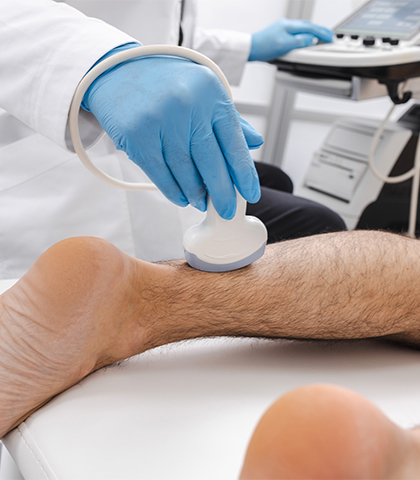
Accurate diagnosis is the foundation of effective CVI treatment. At Miller Vein, every evaluation begins with a thorough consultation covering your symptoms, medical history, risk factors, and how long your legs have been bothering you. We listen carefully, because the pattern of your symptoms tells us a great deal before we even perform an imaging study.
Worried about cost? Review our insurance and CareCredit options — most medically necessary vein care is covered.
The centerpiece of our diagnostic process is a duplex ultrasound examination. This non-invasive, painless test uses sound waves to visualize blood flow through the venous system in real time. It allows our specialists to identify venous reflux and its source, map the affected vessels, assess the severity of valve dysfunction in both the superficial and deep venous systems, and detect any other venous abnormalities that may be contributing to your symptoms.
This detailed map of your venous anatomy is not just important for confirming a diagnosis. It directly guides treatment planning. Knowing exactly which veins are refluxing, where the reflux originates, and how it connects to your symptoms allows us to design a treatment plan that addresses the actual source of the problem, not just what is visible on the surface.
Once the evaluation is complete, your specialist reviews the findings with you directly, explains what is going on in plain language, and walks you through your treatment options before any decisions are made.

I was extremely happy with my results. I was treated with Sclerotherapy. Before and after pictures are incredible! I was very self-conscious about how my legs looked and always wore long capris in the summer to cover them. I wish I had done this sooner. The staff was very professional, friendly, and knowledgeable. They made me feel very comfortable.
My experience was wonderful. The blonde lady at the front desk was so nice and friendly and so were the ladies who took me to the exam room and the one who did my ultrasound. The Dr was great. She explained everything to me thoroughly and was very compassionate. Will definitely send friends and family to that office.
Great Clinic! So glad I went. My legs feel so much better! I can already see some of the benefits and will just get better over time! The doctors and staff are so kind and friendly. Such an easy location with lots of free parking. Highly recommend!!
I was not sure if I would like it here, and that was only because of my past experience with another clinic. This place here was very nice. They took their time with me. Made me feel very comfortable. Especially when the Doctor gave me the treatment plan, I was so happy with it. Thank you everyone at Miller Vein clinic you’re the best.


One of the most common things patients tell us before their first procedure is that they expected it to be more involved than it turned out to be. Here is a straightforward picture of what CVI treatment at Miller Vein actually looks like.
On the day of your procedure, you will review your treatment plan with your specialist and have any final questions answered. The treatment area is prepared, and local anesthesia is administered. Most procedures are completed in well under an hour, and many take considerably less time depending on the number of veins being treated.
After the procedure, you walk out of the clinic. There is no bed rest, no hospital stay, and no general anesthesia. Most patients return to light daily activities the same day. We ask that you avoid strenuous exercise and heavy lifting for a short period following treatment, and we recommend wearing your compression stockings consistently during the recovery period.
Some bruising, mild soreness, or a sensation of pulling or tightness along the treated vein are normal in the first week or two and resolve on their own. Your specialist will walk you through exactly what to expect and what to watch for at your follow-up appointment.
Symptom improvement typically begins within a few weeks as treated veins close and blood flow is rerouted through healthy vessels. Most patients notice meaningful reduction in heaviness, aching, and swelling within the first month. Full results continue to develop over the following two to three months.
Miller Vein offers expert CVI diagnosis and treatment at eight convenient locations throughout Michigan. We see patients at:
Our clinics are open Monday through Friday, 7:00 AM to 5:30 PM.







Chronic venous insufficiency (CVI) is a common but often overlooked medical condition that primarily affects the veins in your legs. CVI occurs when the...
Read BlogOperating Room (OR) nurses and other healthcare professionals play a crucial role in the healthcare system—often working long hours in demanding environments. This dedication...
Read BlogPrefer a call? Fill out the form below, and our team will reach out to help you coordinate your visit.
"*" indicates required fields
Save time by selecting your own appointment slot through our secure scheduling portal.
