
Ready to Schedule?
Save time by selecting your own appointment slot through our secure scheduling portal.


Medically reviewed by Dr. Jeffrey Miller
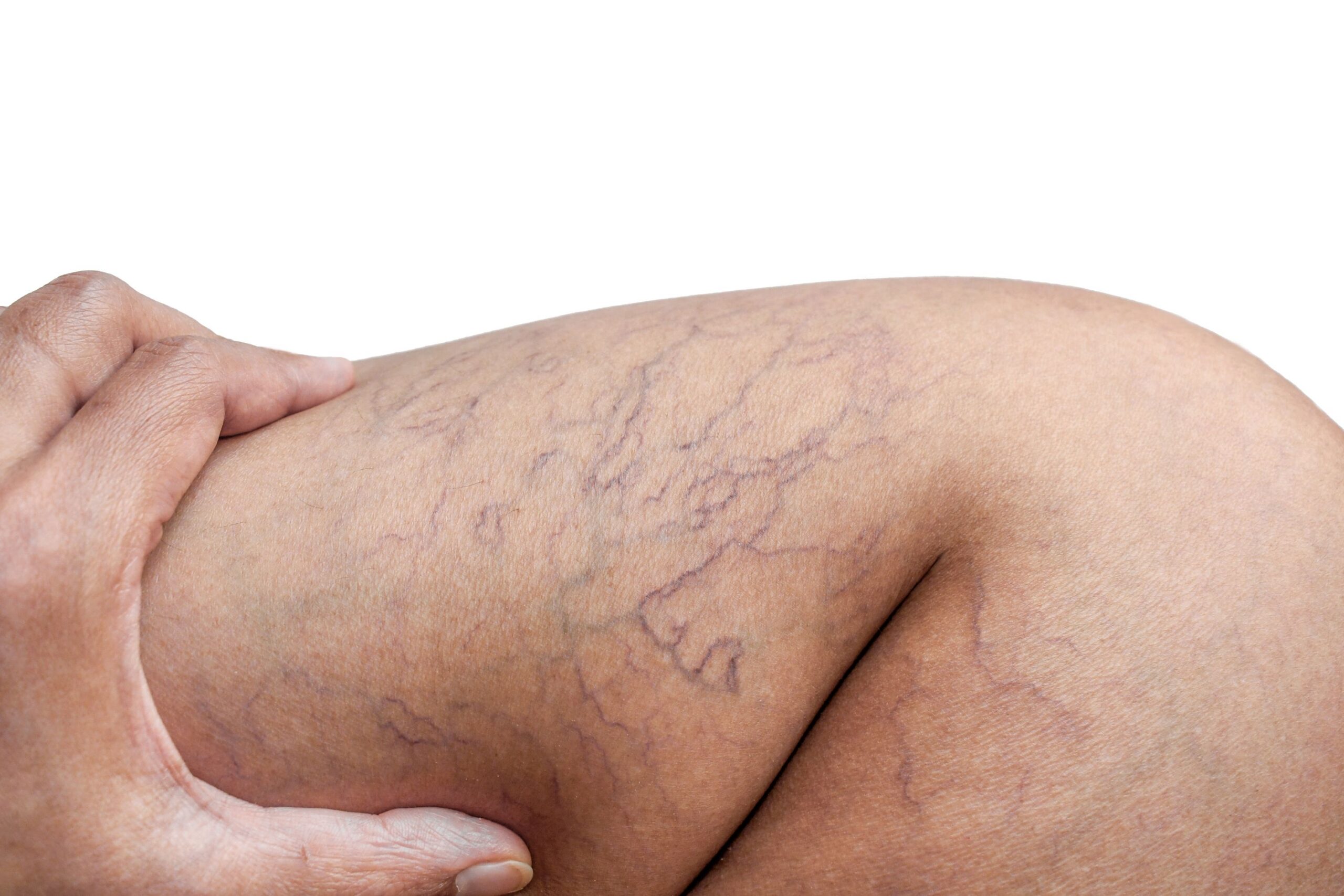
If you’re looking for ways to get rid of spider veins, you’re not alone. Millions of people notice those small, web-like clusters of red, blue, or purple vessels on their legs and face each year, and many spend months wondering whether they’re a cosmetic concern, a health issue, or both. This guide is written for patients in research mode: people who want clear, honest information about how to remove spider veins before committing to any treatment. If you’re near the Farmington Hills, Michigan area and ready to take the next step, our board-certified vein specialists at Miller Vein are here to help. Give us a call to schedule a consultation today.
Spider veins, known medically as telangiectasias, are dilated small blood vessels visible just beneath the surface of the skin. They typically appear on the legs and face and form a branching or web-like pattern. Unlike varicose veins, spider veins are generally flat rather than raised and are most often a cosmetic concern rather than a sign of serious vascular disease. That said, they can sometimes accompany deeper venous insufficiency, which is why a proper diagnosis matters before any treatment begins.
Research suggests several factors may contribute to spider vein formation, including:
· Genetics and family history of vein conditions
· Prolonged standing or sitting
· Hormonal changes related to pregnancy or menopause
· Sun exposure, particularly on the face
· Age-related changes in vessel wall integrity
Understanding what may be contributing to your spider veins can help you and your provider have a more productive conversation at your first visit. At Miller Vein, the approach is always diagnosis before treatment. That means no recommendations are made until a board-certified vein specialist has evaluated your individual situation.
It is also worth noting that spider veins are treated along the cosmetic care path, meaning they are typically not covered by insurance. However, if your spider veins are accompanied by symptoms such as aching, heaviness, or swelling, there may be an underlying medical condition involved. In that case, a clinical evaluation may open the door to insurance-covered care. You can learn more about which vein treatments Miller Vein accepts insurance for before your visit.
When patients ask how to remove spider veins, the answer almost always involves sclerotherapy as the primary clinical option. At Miller Vein, spider vein treatment is offered under the proprietary brand VeinErase, Miller Vein’s dedicated spider vein treatment program. Here is what the treatment landscape looks like.
Sclerotherapy involves the injection of a solution directly into the targeted vein. This solution irritates the vessel wall, causing it to collapse and gradually fade from view over several weeks. It is well-tolerated by most patients and is performed entirely in the office.
Some practices market laser-based devices for spider vein removal on the legs. Miller Vein does not use lasers when treating spider veins. Sclerotherapy consistently delivers better outcomes for leg spider veins, and our own VeinErase approach reflects the practice’s commitment to using the most appropriate method, not the most promoted one.
“Patients who have had laser treatment elsewhere often tell me how much more comfortable sclerotherapy is by comparison,” says Dr. Jeffrey Miller, MD, Founder and CEO of Miller Vein. “They describe laser treatment as feeling like a rubber band being snapped against their skin, over and over again.”
For tiny veins on the face, or vessels in more difficult-to-treat areas such as around the knees or ankles, Miller Vein also offers VeinGogh. This treatment is designed specifically for smaller, more delicate veins in these areas that may not be ideal candidates for injection-based sclerotherapy.
“One of our most memorable VeinGogh patients flew in from out of state after spending $1,500 on laser treatments elsewhere that never cleared his facial spider veins,” adds Dr. Miller. “We were able to get him the results he’d been looking for, and he left thrilled.”
Compression stockings may help reduce discomfort and may slow the progression of spider veins in some individuals, but they do not eliminate existing vessels. If interested, you can read more about how compression stockings support vein health.
Lifestyle adjustments such as regular movement, elevating the legs, and maintaining a healthy weight may also support overall vein health. Discuss these measures with your provider as part of a complete plan. If you want to see real-world outcomes, the varicose and spider vein before-and-after photo gallery at Miller Vein offers a transparent look at what patients have experienced.
One of the most important things to understand when researching how to remove spider veins is that not all visible vein concerns are the same. Spider veins and varicose veins are different conditions, and treating them requires different approaches. Confusing the two can lead to either under-treatment or unnecessary procedures.
Spider veins are small, surface-level, and typically cosmetic. Varicose veins are larger, often raised, and can be associated with chronic venous insufficiency (CVI), a condition in which the valves inside leg veins no longer function properly. CVI can cause symptoms including leg heaviness, aching, swelling, and skin changes. If those symptoms sound familiar, it may be worth reviewing the signs of chronic venous insufficiency to see whether your situation warrants a medical evaluation.
Depending on your symptoms, our board-certified vein specialists may recommend an ultrasound. This is to ensure the visible concern on the surface isn’t masking a deeper issue that requires a different course of care. We promise never to recommend unnecessary procedures, so patients can trust that the recommendation they receive is the right one for them.
For those with underlying venous disease, the right diagnosis can lead to insurance-covered treatment for the medical component, and cosmetic care for what remains. Miller Vein also provides care for related conditions including lymphedema and lipedema, which can sometimes be confused with vein disease due to overlapping symptoms such as leg swelling.
Patients near the Farmington Hills area have access to multiple Miller Vein locations across Southeast Michigan, including offices in Novi, Troy, and Auburn Hills. Miller Vein is a physician-led practice with board-certified vein specialists and a track record backed by more than 2,700 Google reviews, with a 96 percent five-star rating. That kind of consistency does not happen by accident.
Crain’s Detroit Business has recognized the practice as one of Michigan’s best places to work, a distinction that reflects the culture patients experience during their visit. Every recommendation is grounded in the principle that treatment only happens when it is appropriate. Patients are never pressed toward procedures they do not need. For those researching how to get rid of spider veins and wondering whether they can trust the provider they choose, that commitment matters. Read what other patients have shared in the Miller Vein patient testimonials and reviews section.
Spider vein removal is typically considered a cosmetic procedure and is not covered by most insurance plans. However, if your spider veins come with symptoms such as leg aching, heaviness, or swelling, you may have an underlying medical vein condition. That condition may qualify for insurance coverage. A consultation with a board-certified vein specialist can help clarify which path applies to your situation.
The number of sessions needed varies by individual. Factors include the size, density, and distribution of the spider veins being treated. Some patients see meaningful improvement after one session; others benefit from additional treatments. After evaluating your veins, your provider will give you a realistic sense of what to expect.
Most patients tolerate sclerotherapy well, and Miller Vein performs it entirely in the office. Most patients return to their normal routine after their appointment. Mild bruising or temporary discoloration at the injection site is possible. Your provider will walk you through what to expect before and after your session so you feel fully informed and prepared for treatment.
From a patient’s perspective, it can certainly feel like spider veins have “come back” — often not for years after the original treatment. Treated veins generally do not return. However, new spider veins may develop over time, particularly if contributing factors such as genetics, prolonged standing, or hormonal influences remain present. Compression stockings and regular movement may help support vein health between treatments. Discussing a longer-term maintenance approach with your provider is a reasonable part of any spider vein care plan. Pathologically speaking, these are new vessels forming rather than previously treated veins reopening — but visually and symptomatically, it’s understandable that it can feel like a recurrence to the patient.
If you are ready to learn more about getting rid of spider veins near Farmington Hills, Michigan, Miller Vein’s board-certified specialists are available at multiple convenient Southeast Michigan locations. Every consultation starts with a thorough evaluation and an honest conversation about your options. Call Miller Vein today to schedule your visit and take the first step toward clearer, healthier-looking legs.
Prefer a call? Fill out the form below, and our team will reach out to help you coordinate your visit.
"*" indicates required fields
Save time by selecting your own appointment slot through our secure scheduling portal.
