Ready to Schedule?
Save time by selecting your own appointment slot through our secure scheduling portal.


Medically reviewed by Michael E. Lulenski, MD
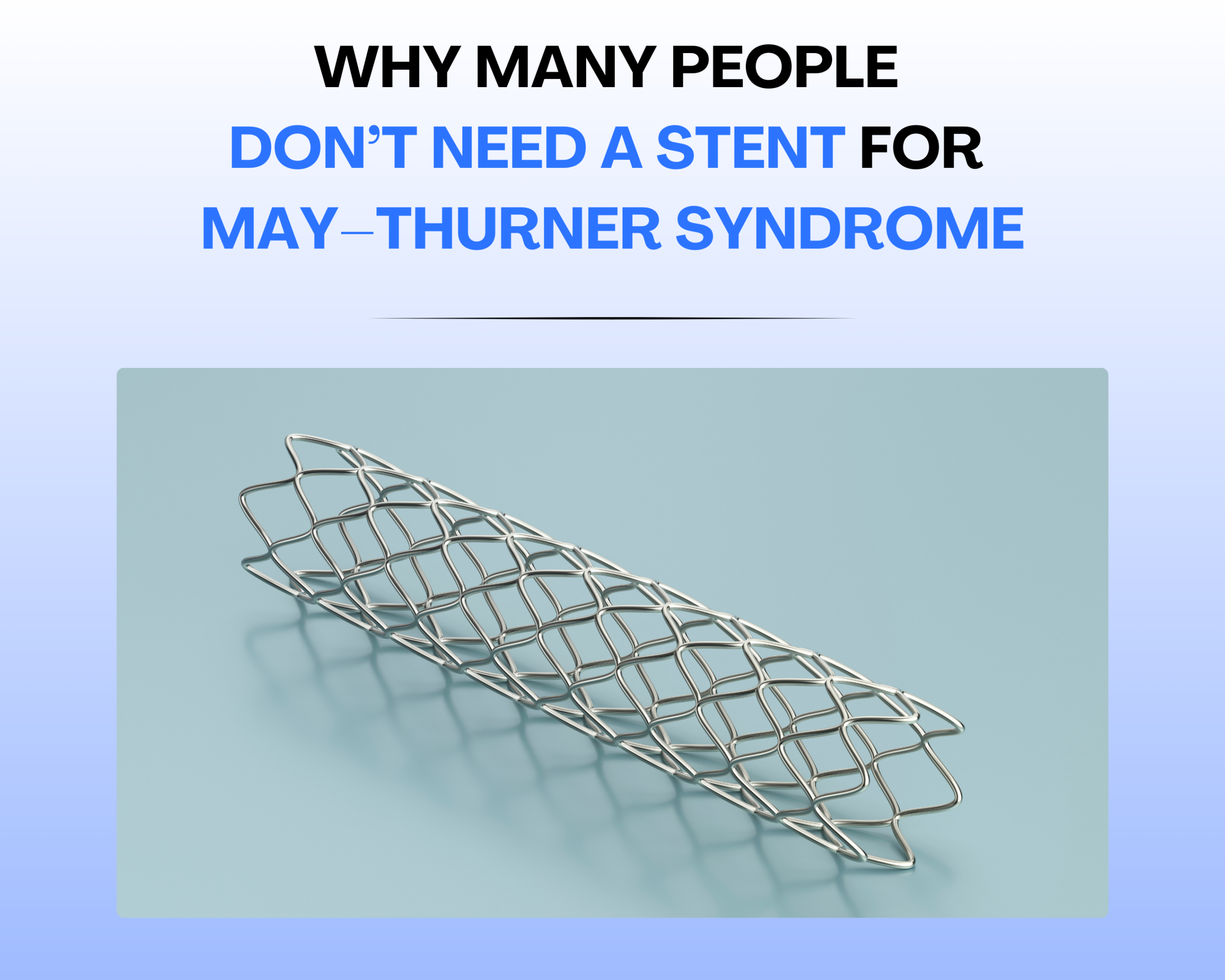
If you’ve ever had a CT scan, MRI, or ultrasound of your abdomen or pelvis, you may have been told you have something called May–Thurner syndrome or “iliac vein compression.”
Here’s the key point: mild pressing of the left iliac vein is a common, normal anatomic finding, and most people who have it are healthy, have no symptoms, and do not need a stent.
You can read more about deep vein thrombosis basics in our condition guide.
Let’s break it down.
May–Thurner syndrome happens when the right common iliac artery crosses over and presses on the left common iliac vein in the pelvis, pinching it against the spine. Veins carry blood out of the leg and back toward the heart. When the vein is squeezed hard enough over time, it can become scarred and narrowed, which slows blood from draining out of the left leg. This is a problem with blood leaving the leg (a vein problem), not with blood flowing into the leg (the arteries are not blocked).
Important distinction:
When it does cause problems, symptoms can include:
Most people told they have “iliac vein compression” on a scan have the harmless anatomic version, not the syndrome.
Imaging tests (CT, MRI, ultrasound, or a specialized test called IVUS) can show a vein that looks narrow. But a narrow-looking vein on a picture does not, by itself, prove the vein is causing symptoms. Many normal veins look narrowed on a scan yet work perfectly well. In recent years, some people have been told that this normal narrowing is:
In fact, none of that may be true. Medical guidelines are clear that stents should not be placed for compression found incidentally on imaging in someone without matching symptoms.
For carefully selected patients with true symptoms or a clot, stenting is generally safe and often works very well. But a vein stent is permanent and cannot easily be removed once placed, so it should only be used when truly needed. Possible downsides include:
Because of this, guidelines recommend trying conservative (non-surgical) treatment first and reserving stents for people with clear, significant symptoms or a true blockage.
A stent is most likely to help when someone has:
Mild swelling, general leg tiredness, varicose veins, or pelvic discomfort are usually caused by other, more common problems — not by iliac vein compression.
If you’ve been told you have May–Thurner syndrome or iliac vein compression, here’s what to keep in mind:
A compressed iliac vein on a scan is very common and often completely normal. Most people with this finding do not have May–Thurner syndrome and do not need a stent. Stents genuinely help the smaller group of people with real symptoms or a clot.
If you’ve been told you need a stent, it’s okay to pause, ask questions, and get another opinion.
Prefer a call? Fill out the form below, and our team will reach out to help you coordinate your visit.
"*" indicates required fields
Save time by selecting your own appointment slot through our secure scheduling portal.
