Ready to Schedule?
Save time by selecting your own appointment slot through our secure scheduling portal.


Medically reviewed by The Miller Vein Team
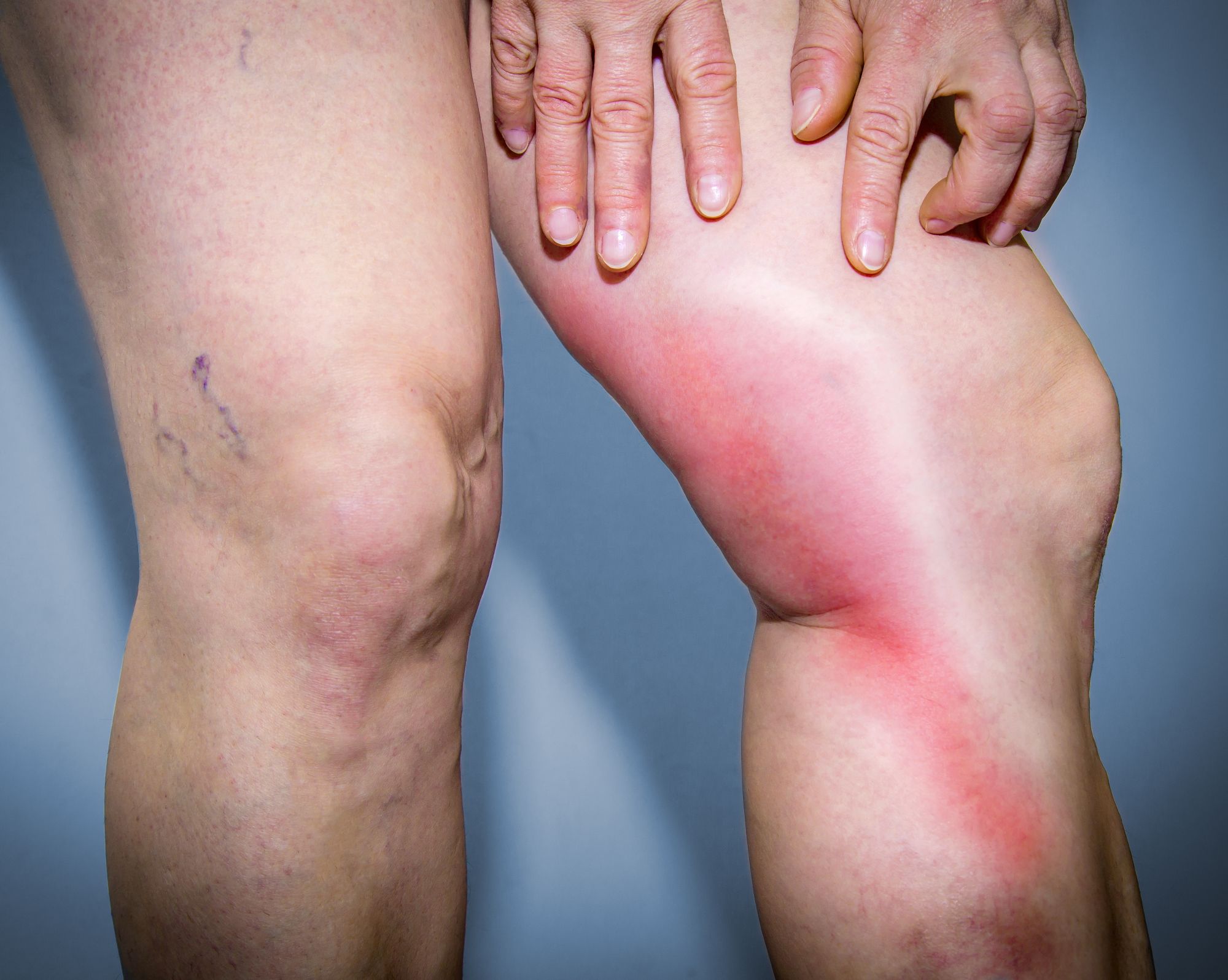
Superficial venous thrombosis (SVT), often called superficial phlebitis or superficial thrombophlebitis, is a blood clot with inflammation in a vein close to the surface of the skin, most often in the leg. For years, SVT was considered a minor, self-limiting nuisance. Today, vein specialists know better. SVT can extend into the deep veins, it can occur at the same time as a deep vein thrombosis (DVT), and in some cases it can lead to a pulmonary embolism. If you have noticed a painful, red, warm, or firm cord under the skin of your leg, it deserves a proper evaluation. To speak with a board-certified vein specialist, give us a call at (877) 432-2184.
Your legs have two main vein systems. The deep veins run through the muscles and carry most of the blood back to the heart. The superficial veins sit just beneath the skin. Superficial venous thrombosis happens when a clot forms in one of these surface veins and the vein wall becomes inflamed.
Because the affected vein is so close to the skin, SVT is usually easy to see and feel. That visibility is one reason it was long thought of as a “surface-level” problem. The name makes it sound minor, but the location of a clot does not tell the whole story. What matters is where the clot is, how large it is, and whether the deep veins are involved as well.
SVT symptoms tend to be localized along the path of the affected vein. Common signs include:
SVT often develops in veins that are already varicose, but it can also appear in veins that looked normal before. Some people mistake it for a bruise, a bug bite, a pulled muscle, or a skin infection, which is one reason it can go unevaluated.
The key difference between SVT and DVT is the depth of the vein involved.
DVT is widely recognized as a serious condition. You can learn more in our guide on what deep vein thrombosis is and our visual guide to what DVT feels and looks like. The important point is that SVT and DVT are not always separate problems. They can be connected.
Superficial and deep veins are linked by connecting veins. A clot that starts near the surface can grow toward and into the deep system, particularly when it forms near the points where the major superficial veins join the deep veins, such as the groin or behind the knee.
Research has made the risks clearer. A systematic review and meta-analysis published in the Journal of Thrombosis and Haemostasis found that among patients presenting with SVT, roughly 18% also had a DVT and about 7% had a pulmonary embolism at the time of diagnosis. In other words, a meaningful share of people who come in for what looks like a simple surface clot have something more serious going on beneath it.
That is why vein specialists no longer treat SVT as automatically benign. It is not a reason to panic, but it is a reason to get checked.
Anyone can develop SVT, but certain factors raise the risk, including:
If you have varicose veins and develop a painful, hardened area along one of them, that combination is worth mentioning to a vein specialist, even if the pain seems manageable.
A physical exam can suggest SVT, but it cannot show whether the clot has reached or is approaching the deep veins. That requires imaging. A duplex ultrasound is the standard test. It is painless and non-invasive, and it lets a specialist see the clot, measure how long it is, see how close it sits to the deep veins, and confirm whether a DVT is also present.
Those details guide the next step. A short clot far from the deep system may be managed very differently from a longer clot near the groin.
Treatment depends on the size and location of the clot and on your overall health. Depending on your ultrasound findings, a plan may include:
Never start or stop a blood thinner on your own. The right approach should come from a provider who has seen your imaging.
If you develop new leg pain, redness, warmth, or swelling, schedule a prompt medical evaluation. Some symptoms, however, need emergency care. Call 911 or go to the nearest emergency room if you have chest pain, sudden shortness of breath, a rapid heartbeat, or you are coughing up blood. These can be signs of a pulmonary embolism.
At Miller Vein, our approach is simple: diagnosis before treatment, and treatment only when it is truly needed. Our board-certified specialists use duplex ultrasound to look directly inside the veins of your leg, so every recommendation is based on what your imaging actually shows. Our DVT checks are available at every Miller Vein location, including Auburn Hills, Dearborn, Grand Rapids, Holland, Macomb, Novi, St. Clair Shores, and Troy.
If your ultrasound shows a DVT, we coordinate next steps right away. If it shows SVT related to varicose veins or venous insufficiency, we can talk through non-surgical, in-office options to treat the underlying problem. As an independent, physician-owned practice that has cared for more than 48,000 patients over nearly 20 years, we will never recommend a procedure you do not need. Miller Vein also accepts more than 700 insurance plans. You can review details on our insurance page.
It can be. Many cases are mild, but SVT can extend into the deep veins, occur alongside a DVT, or be linked to a pulmonary embolism. Because you cannot tell which kind you have by looking at your leg, an ultrasound evaluation is the safest way to find out.
Yes. Superficial phlebitis, superficial thrombophlebitis, and superficial venous thrombosis all describe a clot with inflammation in a vein near the surface of the skin. Vein specialists increasingly use “superficial venous thrombosis” because it makes clear that a clot is involved.
Yes. A superficial clot can grow into the deep vein system, especially when it forms near the groin or behind the knee, where major superficial and deep veins connect. SVT and DVT can also be present at the same time. Ultrasound shows whether the deep veins are involved.
Some mild cases improve over several weeks with conservative care, but you should not assume that is the case without an evaluation. Your specialist needs to rule out deep vein involvement and determine whether you need medication or follow-up imaging.
Yes. Varicose veins are the most common setting for SVT because blood moves slowly and pools in these enlarged veins. Treating varicose veins and the venous insufficiency behind them may help reduce the chance of repeat episodes.
A painful, red, or hardened vein is your body’s way of asking for attention. You do not have to guess whether it is serious. Our board-certified vein specialists can use a quick, painless ultrasound to give you clear answers and a plan that fits your needs. Call Miller Vein today at (877) 432-2184 to schedule an evaluation at the location nearest you.
Sources: Di Minno MNS, et al. “Prevalence of deep vein thrombosis and pulmonary embolism in patients with superficial vein thrombosis: a systematic review and meta-analysis.” Journal of Thrombosis and Haemostasis, 2016. “Superficial venous thrombosis: cause for concern.” Blood (American Society of Hematology), 2013.
Prefer a call? Fill out the form below, and our team will reach out to help you coordinate your visit.
"*" indicates required fields
Save time by selecting your own appointment slot through our secure scheduling portal.
